Is Your Aircon Thermostat Causing Problems?
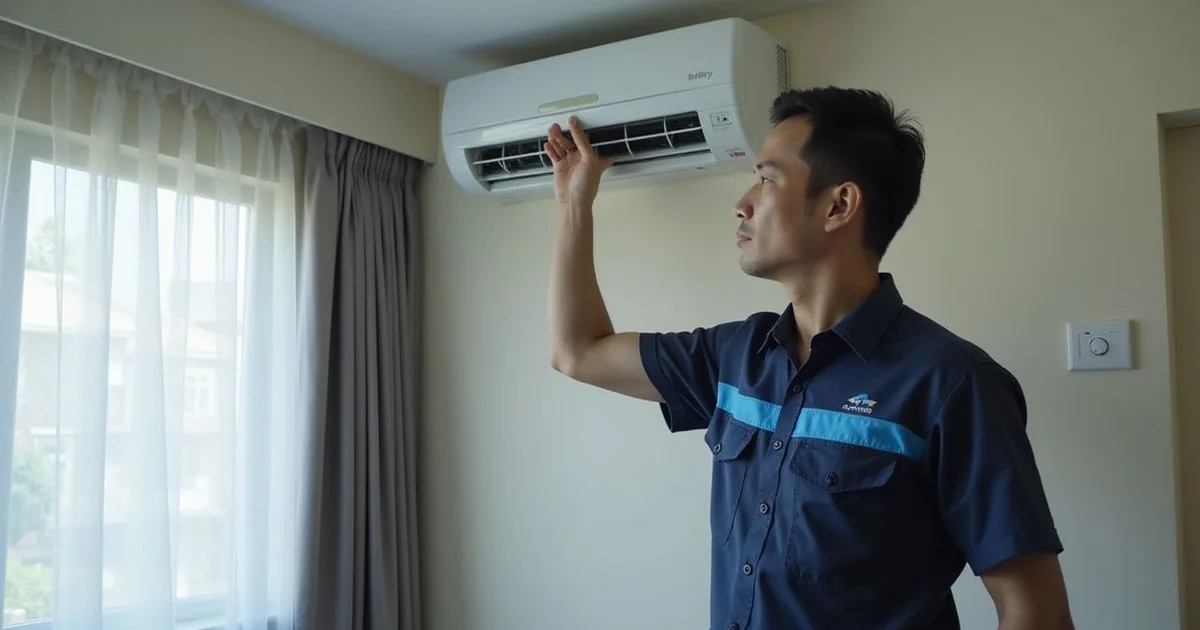
We regularly see how a tiny, malfunctioning temperature sensor can completely disrupt a home’s comfort.
The reality is that this small component controls the entire cooling cycle, and a failure means your system either freezes you out or runs endlessly. Our experience at Billy Aircon, where we have grown from a five-person crew in 2003 to a 26-member team dedicated to keeping Singapore cool, shows that having a reliable AC thermostat not working troubleshooting guide prevents expensive misdiagnoses.
Let’s look at the specific data behind these failures, analyse the common causes, and explore the exact steps you can take today.
Signs Your Aircon Thermostat Is Not Working
Temperature Readings Are Wrong
If your aircon displays 24°C but the room feels noticeably warmer or cooler, the thermostat sensor may be giving inaccurate readings.
This error causes the compressor to shut off too early or run for too long. We often find that a sensor drifting just a few degrees off calibration completely ruins the cooling efficiency. A thermostat issue is one of the most common reasons your aircon is not cold despite running continuously.
Aircon Runs Non-Stop
A thermostat that cannot detect the room has reached the set temperature will keep the compressor running indefinitely.
This defect wastes electricity and puts unnecessary strain on the compressor mechanism. Our technicians have seen faulty thermostats push usage up so much that homeowners face a massive shock when their SP Group bills arrive.
The Q1 2026 regulated tariff sits at 29.11 cents per kilowatt-hour including GST, meaning an AC unit running constantly can easily add an extra $50 to $80 to your monthly expenses.
Aircon Turns On and Off Rapidly
Short cycling, where the unit turns on for a few minutes then shuts off and restarts, points to a thermostat that is fluctuating between readings.
The compressor starts, the thermostat suddenly reads a lower temperature and stops it, then reads a higher temperature and starts it again. We know from field testing that this rapid cycling can increase your energy consumption by 20 to 30 percent.
The system wastes massive amounts of power during the startup phase without ever reaching a highly efficient, steady cooling state.
Remote Control Set Temperature Has No Effect
If changing the temperature on your remote produces no change in cooling output, the thermostat may not be receiving the signal or may be stuck at a particular reading.
You might need to check if the infrared receiver on the indoor unit is blocked by dense dust. We always recommend testing the remote first before assuming the internal electronics have failed.
Common Causes of Thermostat Problems in Singapore
Dust and Debris on the Sensor
Singapore’s 85 percent average humidity promotes rapid dust and mould accumulation inside cooling units.
The thermistor sensor, usually located on or near the evaporator coil, easily gets coated with a thick layer of grime. We highly recommend a professional chemical wash, which typically costs between $80 and $120 per unit in 2026, to strip this insulating layer away.
Regular aircon servicing includes cleaning this sensor using water-based alkaline solutions to restore accurate temperature detection.
Corroded or Loose Connections
Humidity acts as the ultimate enemy of electrical connections.
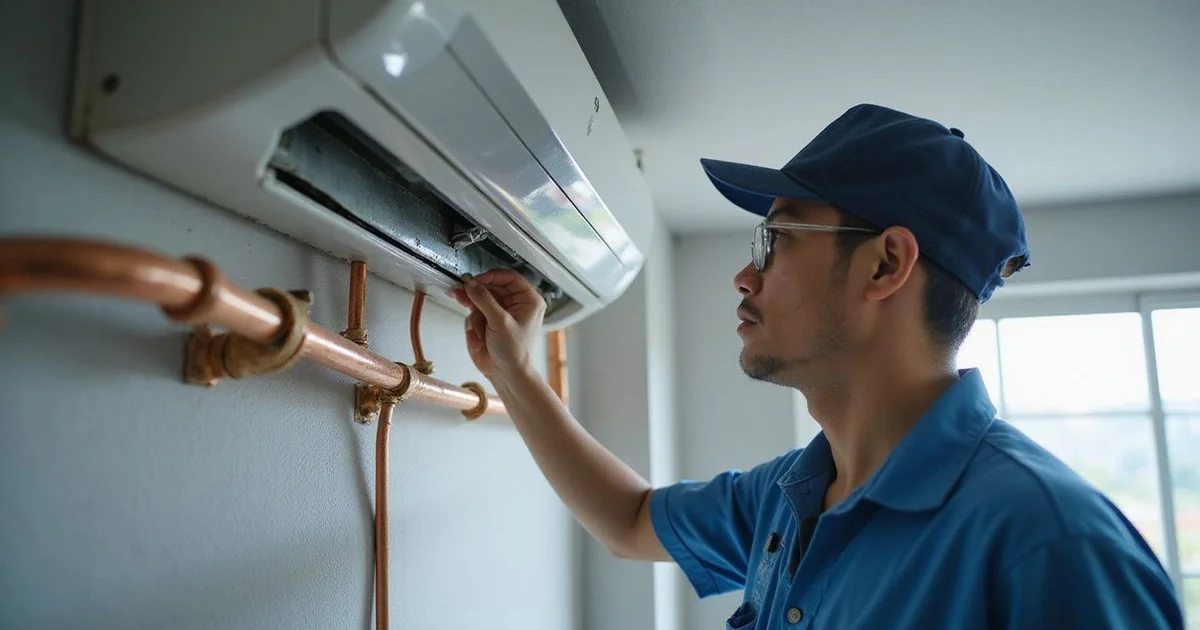
Over time, the fragile wires connecting the thermistor to the printed circuit board can corrode, leading to intermittent or inaccurate signals. Our repair teams frequently encounter this specific issue in coastal areas like East Coast or Pasir Ris, where salty air accelerates the degradation of copper wiring.
Sensor Position Shifted
The thermistor needs to sit in the correct position relative to the evaporator coil.
If it has shifted due to heavy vibration or during a previous service, its readings will not accurately reflect the air temperature passing through the fins. We often fix this by simply clipping the probe back onto the cold copper piping.
A physical inspection quickly reveals if the sensor probe is resting against a warm plastic casing instead of the metal coil.
Faulty Thermistor
Thermistors inevitably degrade over time as their internal resistance values drift, causing highly inaccurate temperature readings.
Different brands rely on specific baseline readings to function correctly. We regularly test these components and find that a healthy Daikin thermistor usually reads around 10k or 20k ohms at 25°C, while a Mitsubishi Electric Starmex sensor typically measures closer to 5k ohms.
A sensor that has been operating for seven or eight years may still function but with significantly reduced accuracy.
PCB Issues
The printed circuit board acts as the brain that interprets the raw thermistor signal.
If the PCB develops a fault in the section that processes temperature data, the thermostat will fail to operate correctly even if the sensor itself is perfectly fine. Our experience shows that repairing a damaged mainboard is usually the most expensive scenario in this diagnostic process.
AC Thermostat Not Working? Step-by-Step Troubleshooting Guide
Step 1: Check Your Remote Control
Before suspecting the internal thermostat, you must ensure your remote is working properly.
Replace the old batteries with fresh ones and test from close range by pointing directly at the infrared receiver. Our favourite insider trick is to point the remote at your smartphone camera while pressing a button.
You will see a purple light on your phone screen if the infrared emitter is actively sending a signal.
Step 2: Clean the Air Filters
Dirty filters severely restrict airflow over the evaporator coil and the sensitive thermistor.
This restriction causes the sensor to read lower temperatures than the actual room temperature because it is measuring the stagnant cold air trapped behind the clogged mesh. We suggest you remove and wash the filters thoroughly, dry them completely, and then test the unit again.
Step 3: Reset the Unit
Turn off the aircon at the isolator switch, not just the handheld remote.
Wait two full minutes to allow the internal capacitors to discharge and the PCB to fully reset. We find that this brief pause also resets the short-cycle protection timer built into the outdoor compressor.
Turn the power back on and observe whether the thermostat responds correctly to new temperature inputs.
Step 4: Test With a Separate Thermometer
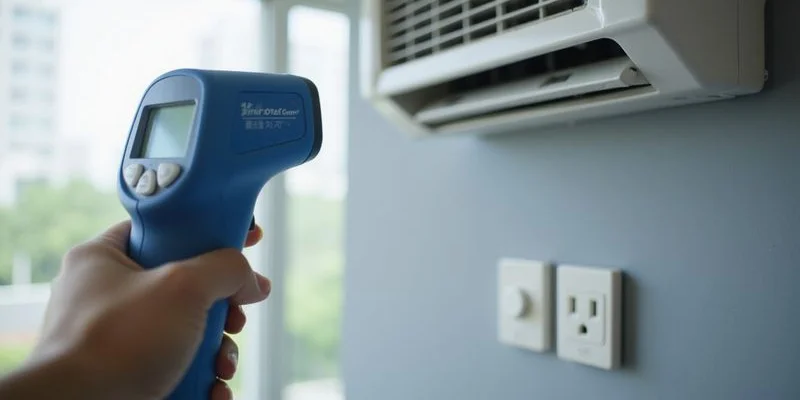
Place a digital thermometer near the return air intake at the top of the indoor fan coil unit.
Set the aircon to 25°C and let it run continuously for 30 minutes. We always advise clients to compare the external thermometer reading with the digital display on the wall.
If there is a difference of more than 2°C, the thermostat sensor likely needs professional calibration or replacement.
Step 5: Inspect the Thermistor (Advanced)
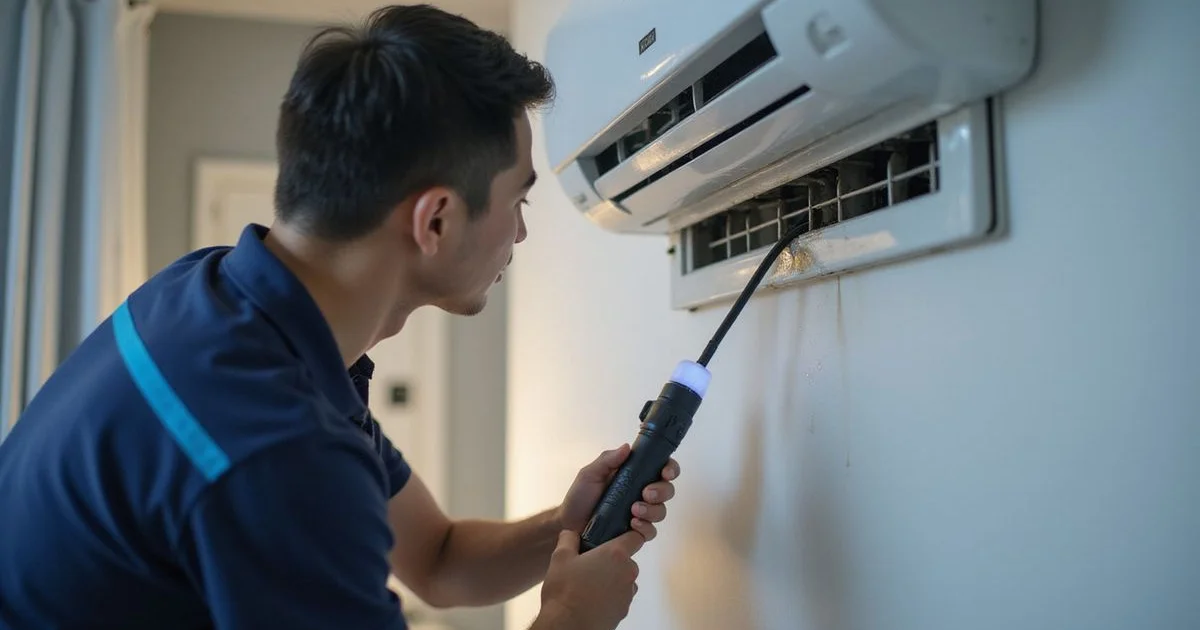
If you feel highly confident opening your aircon unit, you can visually inspect the thermistor probe yourself.
It appears as a small wire with a black bead, usually clipped to the right side of the evaporator coil or positioned securely in the return air path. Look for the following common physical defects:
- Dust or grime coating the sensor bead
- Loose clips or a shifted mounting position
- Corroded or frayed connection wires
- A bent or physically damaged probe
Important: If you are not completely confident working with electrical components, skip this step and call a professional. Incorrect handling can easily damage the PCB or create severe electrical hazards.
When to Call a Professional
You should contact a professional technician immediately when the basic troubleshooting steps fail to resolve the problem.
Watch out for these serious warning signs:
- The thermostat issue persists after cleaning filters and resetting the power
- Ice forms visibly on the copper evaporator coils
- The system makes unusual clicking or buzzing sounds from the circuit board
- Your electricity bill has increased noticeably without a change in usage habits
- An error light is blinking alongside the cooling failure
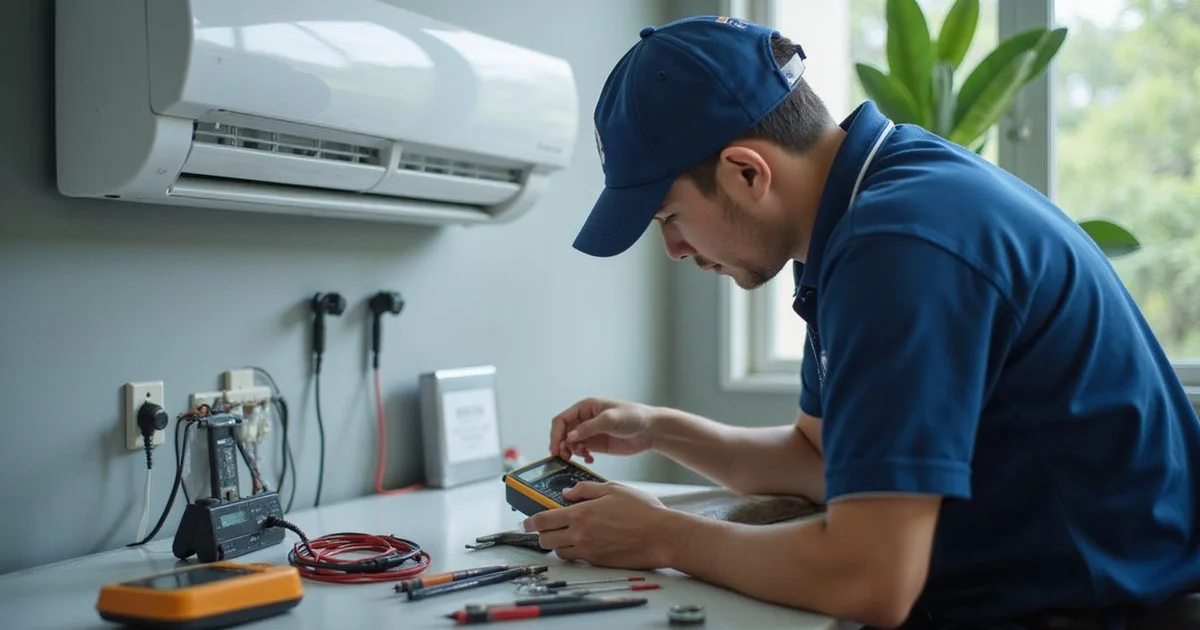
Our technicians use industry-standard tools like the Fluke 116 digital multimeter to precisely measure the resistance of your current sensor.
Replacing a faulty component on the spot is efficient since the team carries thermistors for all major brands. If the internal fouling is severe, a complete chemical overhaul, which generally costs between $150 and $250 in Singapore, might be required to restore the airflow. We always test the new sensor’s resistance values to ensure perfectly accurate readings before completing the job.
Thermostat Issues vs Other Problems
Sometimes what initially seems like a thermostat problem is actually a completely different mechanical failure.
This simple diagnostic table helps isolate the true root cause:
| Symptom | Possible Thermostat Issue | Other Possible Causes |
|---|---|---|
| Not cooling | Sensor reading too low | Low refrigerant gas, dirty coil |
| Short cycling | Fluctuating readings | Oversized unit, drainage issues |
| Runs non-stop | Sensor reading too high | Undersized unit, air leak in room |
| Uneven cooling | Sensor in wrong position | Blocked vents, duct issues |
Preventing Thermostat Problems
The absolute best way to prevent sudden thermostat issues is through consistent, scheduled maintenance.
Our technicians perform several critical system checks during a standard aircon service:
- Clean the thermistor sensor using specialized water-based coil cleaners
- Check the sensor placement and tightly secure the mounting clip
- Test resistance values against the official manufacturer specifications
- Inspect all wiring connections for early signs of copper corrosion
- Verify the temperature accuracy with a calibrated digital thermometer
You should book a servicing session every three months for residential units in Singapore.
We see that the combination of high daily usage, 85 percent humidity, and urban dust means internal components degrade much faster here than in cooler climates.
Get Your Thermostat Fixed
If your aircon thermostat is giving you trouble, do not wait for the problem to worsen.
A malfunctioning temperature reader forces your compressor to work much harder, increasing wear on expensive parts and pushing up your monthly electricity costs.
WhatsApp Billy Aircon at +65 9456 0875 for a same-day diagnosis and guaranteed repair. We proudly back all our thermostat repairs with a comprehensive 90-day warranty, ensuring this AC thermostat not working troubleshooting guide is the last one you will ever need.