We often see air conditioning units behaving erratically, and the culprit is usually smaller than a coin. This tiny component dictates the entire cooling cycle, acting as the system’s messenger.
Our technicians at Billy Aircon find that a faulty temperature sensor is behind many of the cooling complaints we receive in Singapore.
Understanding how this sensor works helps you catch minor issues before they turn into costly repairs.
We will explain the function of the Aircon Thermistor: What It Does & Signs It Needs Replacing, and cover common fault codes to look out for. This guide breaks down the different sensor types, outlines the symptoms of a failing unit, and details the typical repair process.
Aircon Thermistor: What It Does & Signs It Needs Replacing
A thermistor is a small temperature-sensing component inside your aircon unit. We know the name comes from combining “thermal” and “resistor” because it is essentially a resistor whose electrical resistance changes with temperature. Your aircon uses this changing resistance to measure the air temperature and make decisions about cooling.
Most split-system aircon units in Singapore have at least two thermistors, such as the ambient sensor for room temperature and the pipe sensor for the evaporator coil. Our team, founded in 2003 and now a group of 26 dedicated to keeping Singapore cool, sees these sensors fail frequently in local HDB flats and condominiums. Some higher-end models, like the Mitsubishi Starmex MSY-GN10VF, use multiple thermistors to monitor different points in the system.
Thermistor replacements are one of the most common repair jobs handled by professionals. We notice that these small components play an outsized role in your aircon’s performance, and the effects are immediately noticeable when they fail. A replacement typically costs between $90 and $250 in Singapore, depending on the brand and model.
How Does a Thermistor Work?
The thermistor sits in the airflow path or clips directly onto the evaporator coil. We observe that as air passes over it, the component’s resistance changes proportionally to the temperature. The PCB board reads this resistance value and converts it into a temperature reading.
Most air conditioners use Negative Temperature Coefficient sensors, meaning the resistance drops as the temperature rises. Our technicians test these sensors using multimeters to verify specific factory ratings. Common resistance ratings include:
- 5K ohms
- 10K ohms
- 15K ohms
- 20K ohms
We know that based on this reading, the PCB makes critical operational decisions. The control board will then decide to:
- Start or stop the compressor
- Adjust the expansion valve (in inverter models)
- Trigger defrost mode if ice is detected on the coil
- Display the current room temperature
- Activate error codes if readings are out of range
Types of Thermistors in Your Aircon
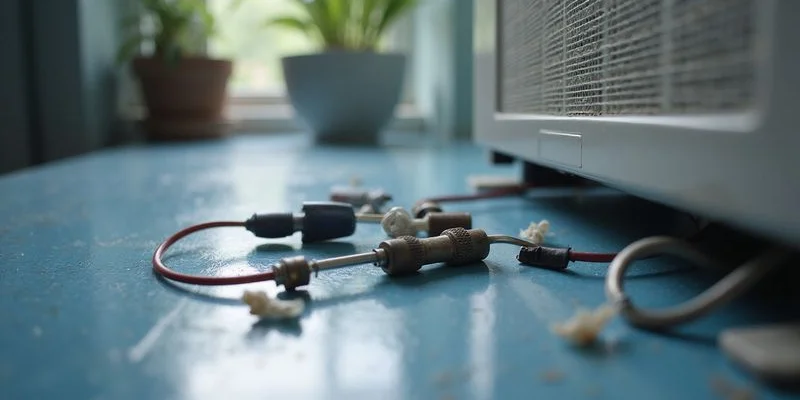
Different brands utilise various sensors to monitor the cooling cycle. We frequently replace these distinct sensor types across commercial and residential setups. Each one serves a highly specific purpose.
Room Temperature Sensor (Ambient Sensor)
This thermistor is positioned in the return air path of the indoor unit. We find it measures the temperature of the air being drawn back into the air conditioning system.
The PCB compares this reading against your set temperature to determine how much cooling is needed. Mitsubishi systems often label this the TH1 sensor on their schematics.
Evaporator Coil Sensor (Pipe Sensor)
This thermistor clips directly onto the evaporator coil pipes. Our maintenance crews check this sensor because it monitors the coil temperature to prevent freezing.
If the coil gets too cold, ice can form and block airflow entirely. We rely on the pipe sensor to trigger the defrost cycle before this happens. On Mitsubishi units, this is commonly referred to as the TH2 sensor.
Outdoor Temperature Sensor
Found in the outdoor unit, this sensor helps the system adjust compressor speed and refrigerant flow based on the external temperature. We see this component working hard in Singapore, where outdoor temperatures regularly exceed 32°C.
This sensor ensures the system compensates for the intense tropical heat. Our technicians note that a faulty outdoor sensor can cause the entire system to shut down protectively. A system shutdown prevents severe compressor damage.
Discharge Pipe Sensor
Some units have a sensor on the compressor discharge pipe to monitor high-pressure refrigerant temperature. We look at this sensor closely because abnormally high readings indicate a refrigerant gas issue or a compressor problem.
Daikin units will often throw a J3 error code if this specific sensor fails. A quick diagnosis keeps repair costs down.
Signs Your Thermistor Needs Replacing
A failing sensor displays several clear warning signs. We encounter these symptoms daily during our service calls. Identifying the issue early prevents further damage to the condenser.
1. Inaccurate Temperature Display
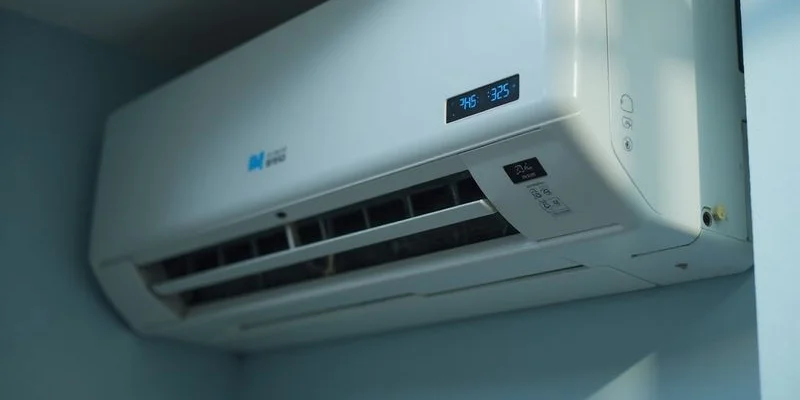
If your aircon shows 24°C but the room clearly feels warmer or cooler, the ambient thermistor may be drifting. Our diagnostic tests often reveal that a thermistor degraded over years of use gives readings several degrees off from the actual temperature. This discrepancy forces the system to work harder than necessary.
2. Aircon Not Cooling Properly
When the ambient sensor reads a lower temperature than reality, the compressor shuts off too early. We know the PCB thinks the room has reached the set temperature, so it stops the cooling process.
You end up with a room that never quite feels cool enough. We handle this issue frequently, as it is one of the most common reasons for aircon not cold complaints. A prompt inspection resolves the cooling drop.
3. Ice Formation on the Evaporator Coil
A faulty pipe sensor may fail to trigger the defrost cycle. Our repair teams see that without this protection, the evaporator coil temperature drops below freezing and ice builds up. You might see ice on the coil through the front panel or notice water dripping when the ice eventually melts.
4. Compressor Short Cycling
If the thermistor sends fluctuating readings, the compressor starts and stops repeatedly in short intervals. We advise against ignoring this short cycling, as it is inefficient and increases electricity consumption. This constant stopping and starting puts excessive wear on the compressor motor.
5. Error Codes and Blinking Lights
Many aircon brands display specific error codes when a thermistor fails or sends out-of-range readings. We use these codes as a roadmap for troubleshooting. Here are common sensor-related codes for popular brands in Singapore:
- Daikin: C5 or C6 indicates a gas or liquid pipe thermistor malfunction.
- Daikin: J6 points to a faulty outdoor heat exchanger thermistor.
- Mitsubishi: P1 signals an intake sensor error.
- Mitsubishi: P2 or P9 indicates a pipe sensor error.
6. Aircon Runs Continuously
The opposite of short cycling happens if the ambient sensor reads higher than reality. We see cases where the compressor never stops because the PCB believes the room has not yet reached the target temperature. Your electricity bill climbs while the room becomes uncomfortably cold.
What Causes Thermistor Failure?
Several environmental and operational factors contribute to sensor degradation. We identify these root causes during our site inspections. Understanding these factors helps you protect your investment.
Age and Wear
Thermistors are electrical components with a finite lifespan. Our records show that after five to eight years of continuous use in Singapore’s hot climate, their resistance characteristics begin to drift. The temperature readings naturally become less accurate over time.
Humidity and Corrosion
Singapore’s humidity levels regularly exceed 80 percent. We often find that moisture corrodes the thermistor leads and the connection points on the PCB. Corroded connections increase electrical resistance and produce wildly inaccurate readings.
Power Surges
Lightning strikes and power grid fluctuations can damage the thermistor or the PCB circuitry that reads it. We highly recommend surge protectors, as Singapore experiences frequent thunderstorms. Without protection, sudden voltage spikes easily fry these sensitive components.
Physical Damage
The thermistor can be accidentally damaged during servicing if a technician dislodges it from its clip or pulls on the wires. We train our staff rigorously to handle these delicate components with care. Hiring experienced professionals prevents this type of unnecessary damage.
Can You Replace a Thermistor Yourself?
While the physical replacement of a thermistor seems relatively straightforward, it involves delicate electrical work. We strongly advise against DIY replacements for a few critical reasons. A simple unclip and reconnect process can quickly turn into a costly PCB replacement if done incorrectly.
Here are the main reasons to use a professional:
- Correct specification: Thermistors come in different resistance values, such as 5K, 10K, 15K, or 20K ohms. Using the wrong specification causes the system to read temperatures incorrectly. Our technicians verify the exact specification for your unit model before fitting a replacement. This ensures your system functions flawlessly.
- Proper testing requires specialized tools: After replacement, the sensor needs to be tested to ensure its resistance at room temperature matches the expected value within tolerance. We use calibrated multimeters on specific PCB connections, like the CN20 or CN21 pins on Mitsubishi boards, for this vital verification step. Precision is non-negotiable here.
- Root cause identification saves money: Sometimes a thermistor failure is a symptom of a deeper issue, such as a PCB fault or a refrigerant problem. A professional identifies whether the sensor is the root cause or just one part of a larger issue.
The Replacement Process
Knowing what to expect during a service visit gives you peace of mind. We follow a strict diagnostic and repair protocol to ensure accuracy. When you call Billy Aircon for a thermistor replacement, here is what our technicians do:
- Diagnose the fault using specific brand error codes and multimeter resistance checks.
- Identify the exact sensor specification and safely disconnect the faulty unit from the PCB.
- Install the new thermistor, securing it with the appropriate clip in the correct position.
- Test resistance values at room temperature and run the unit to verify accuracy.
- Clear any stored error codes from the system memory.
We typically complete the entire process in 30 to 45 minutes. The repair cost generally ranges from $90 to $250, and it is fully covered by our 90-day warranty.
Thermistor Maintenance Tips
While you cannot prevent a thermistor from eventually wearing out, you can extend its lifespan. We encourage proactive care to minimize unexpected breakdowns. Follow these best practices to keep your sensors functioning properly:
- Schedule regular aircon servicing to keep the sensor clean and free of insulating dust.
- Ensure your home has proper surge protection to defend against electrical spikes.
- Avoid running the aircon at extremely low temperatures below 18°C for extended periods.
- Keep the area around the indoor unit clear for proper airflow over the sensor.
Get Your Thermistor Checked
Prompt action saves you money on electricity and prevents major component failure. We are ready to assist if your air conditioning system is acting up. If your unit is not cooling properly, displaying wrong temperatures, or showing error codes, the thermistor could be the culprit.
WhatsApp Billy Aircon at +65 9456 0875 for a professional diagnosis. We carry replacement sensors for all major brands and can complete the repair in a single visit, backed by our 90-day warranty. Resolving your Aircon Thermistor: What It Does & Signs It Needs Replacing issues is our top priority.