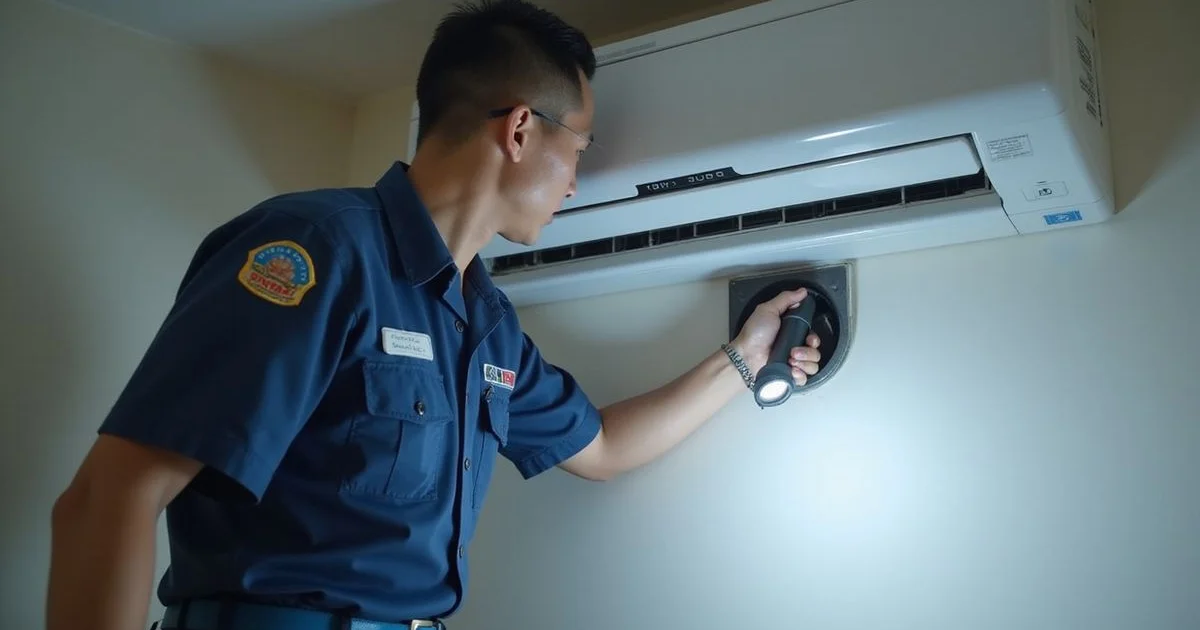
Living in Singapore means dealing with constant moisture. The Meteorological Service Singapore consistently reports average daily humidity levels hovering around 84 percent.
During the Northeast Monsoon season, this figure often spikes above 95 percent before dawn. This excessive moisture makes the heat feel unbearable and creates the perfect breeding ground for mould in your wardrobes.
You probably already know how to cool a room, but figuring out how to reduce humidity at home with your aircon requires a slightly different approach.
We started Billy Aircon back in 2003 with just five technicians. This small group has since grown into a dedicated team of 26 professionals helping thousands of homeowners master their indoor climate.
Let us break down exactly how your system handles moisture and share a few practical adjustments you can make right now.
How Your Aircon Removes Humidity
Every standard air conditioning unit functions as a powerful dehumidifier. Warm, damp air gets pulled across the icy surface of the indoor evaporator coil.
The moisture suspended in that air instantly condenses into liquid water. This physical reaction is identical to the beads of sweat forming on a cold glass of iced kopi.
A typical 9,000 BTU bedroom unit extracts roughly 0.8 to 1.2 litres of water from your air every single hour. This condensed water drips safely into the internal drainage pan and exits your home through the PVC drain pipe.
The system then pushes the newly dried, chilled air back into your living space. We see many homeowners surprised by just how much water their system removes daily. You can easily optimise this built-in feature to make your home significantly more comfortable.
Pro Tip: If your aircon drain pipe is dripping steadily outside, your system is actively and successfully pulling excess moisture from your indoor air.
Using Dry Mode to Control Humidity
What Is Dry Mode?
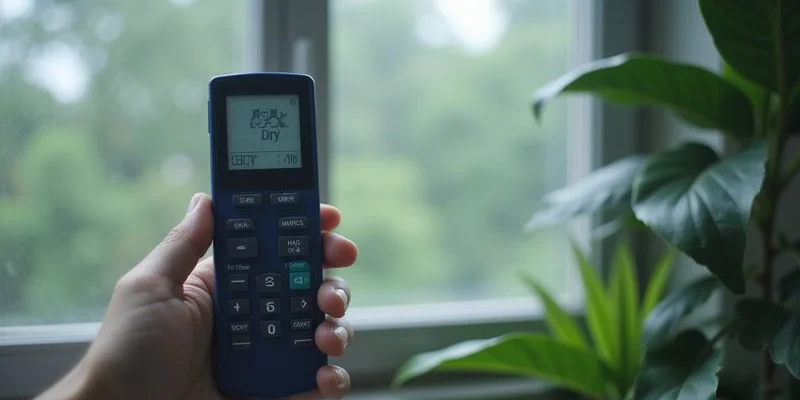
You can easily spot the dry mode function by looking for the water droplet symbol on your remote. This specific setting tells your system to prioritise moisture removal over aggressive cooling.
The internal compressor shifts to run in shorter, intermittent cycles. Simultaneously, the indoor blower fan automatically drops to its lowest speed setting. This slow airflow gives the damp air maximum contact time with the cold evaporator coil, allowing it to wring out as much moisture as possible.
When to Use Dry Mode
We highly recommend switching to this setting during specific weather conditions. It provides excellent comfort without freezing you out of the room.
- Rainy afternoons: Perfect for those sudden monsoon downpours when humidity spikes but temperatures drop slightly.
- Early mornings and late evenings: Ideal for times when the sun is down but the air still feels thick and sticky.
- Bedrooms at night: This setting keeps you comfortable while sleeping without the high electricity draw of continuous cooling.
- Rooms with poor ventilation: Essential for enclosed HDB study rooms where moisture from human breath tends to accumulate rapidly.
Dry Mode vs Cool Mode for Humidity
Choosing the right setting makes a massive difference in both comfort and your monthly SP Group utility bill. Standard cooling mode runs the compressor hard to drop the temperature fast. Dry mode takes a much gentler, energy-saving approach.
| Aspect | Cool Mode | Dry Mode |
|---|---|---|
| Primary function | Lower temperature | Remove moisture |
| Compressor operation | Continuous | Intermittent |
| Fan speed | Variable (user set) | Low (automatic) |
| Energy consumption | Higher | Lower |
| Cooling effect | Strong | Mild |
| Dehumidification | Good | Better |
Optimal Aircon Settings for Humidity Control
Temperature Setting
The National Environment Agency (NEA) recommends setting your aircon at 25°C for optimal energy efficiency. We suggest keeping your thermostat right between 24°C and 26°C for the best balance of moisture removal and comfort.
Dialing the temperature down to 18°C forces the compressor to work continuously, wasting electricity and freezing the room. The 24-26°C sweet spot ensures the coil stays cold enough to extract moisture efficiently without overworking the motor.
Fan Speed
You must reduce the airflow to maximise dehumidification. Setting your fan to the lowest speed allows the air to linger over the evaporator coil.
High fan speeds rush the air past the coil too quickly, drastically reducing the amount of water the system can extract per cycle. Always choose the low or “quiet” fan setting when fighting sticky indoor air.
Swing Position
Warm, humid air naturally rises toward the ceiling of your HDB flat or condo. We advise setting your directional louvers to a horizontal or slightly upward angle.
This positioning forces the unit to draw in the most moisture-laden air from the upper portion of the room. Pointing the louvers straight down feels nice on your face but reduces the total moisture extraction rate in the space.
Keep Doors and Windows Closed
Leaving a window cracked is the fastest way to ruin your indoor climate control. Singapore’s thick, humid outdoor air will instantly rush in to replace the dry air your system just created.
Even a tiny gap in your bedroom window easily overwhelms your aircon’s dehumidification capacity. Ensure all access points are tightly shut before powering on the unit.
Additional Tips for Reducing Humidity at Home
1. Run the Aircon Regularly
Running your system for a continuous two-hour block removes far more moisture than blasting it for twenty minutes at a time. The first thirty minutes of operation barely scratch the surface, mostly just drying the air directly around the unit.
Extended run times allow the system to pull deep-seated moisture out of your fabric sofas, curtains, and mattresses. Stopping the cooling cycle too soon guarantees that humidity will bounce right back.
2. Ensure Your Aircon Is Well Maintained
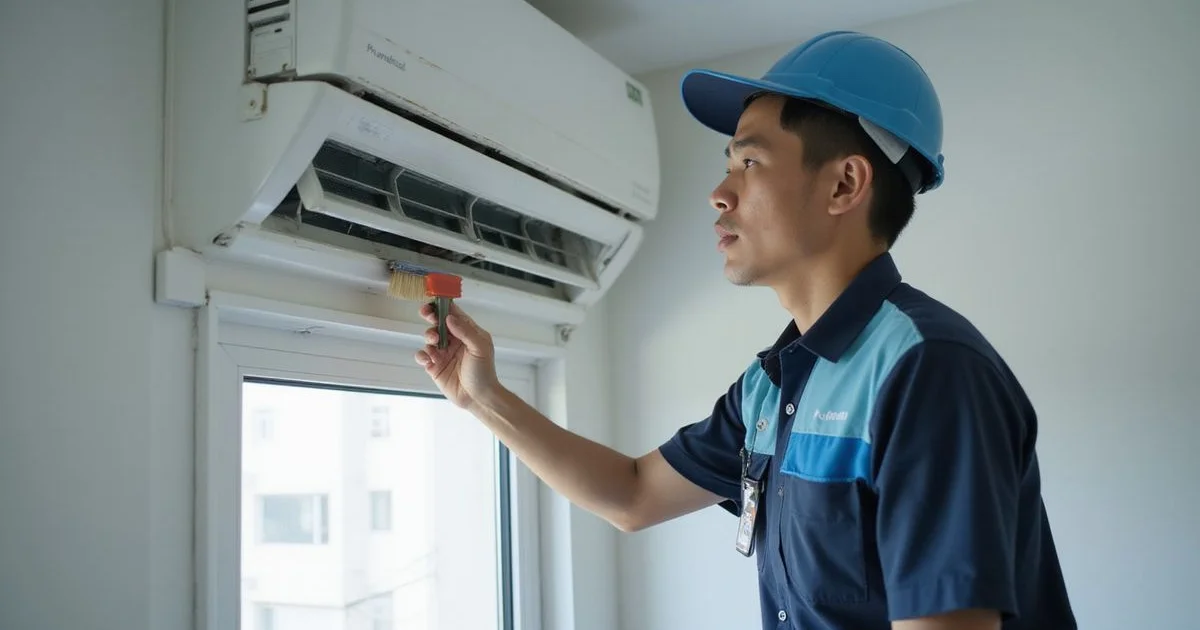
A thick layer of dust on your evaporator coil acts like a winter coat, insulating the cold metal from the warm air. This grime severely reduces the crucial temperature difference needed for water condensation to occur.
We find that units lacking proper maintenance drop their moisture removal efficiency by up to 30 percent. Scheduling routine aircon servicing strips away this insulating dirt and restores the unit’s full drying power.
3. Check Your Drainage
A sluggish or blocked PVC drain pipe causes water to pool directly inside your indoor unit’s drainage tray. This stagnant water immediately begins evaporating right back into the cool air blowing into your room.
This completely defeats the purpose of running the system in the first place. Clearing blockages promptly prevents this recycling of moisture and stops dangerous water leaking that can damage your flooring.
4. Use Exhaust Fans in Kitchens and Bathrooms
Boiling a pot of soup or taking a hot ten-minute shower dumps huge volumes of steam directly into your home. You need to activate your mechanical exhaust fans during these activities and leave them running for at least fifteen minutes afterward.
This simple habit mechanically ejects the damp air outside before it can drift into your air-conditioned living spaces.
5. Avoid Drying Laundry Indoors
Hanging wet clothes in your service yard or spare bedroom releases litres of water vapour directly into your enclosed environment. We strongly recommend using a vented tumble dryer or hanging clothes on outdoor bamboo poles whenever the weather permits.
If you absolutely must dry garments inside, you should seal that specific room and run the aircon strictly on dry mode to handle the massive moisture load.
6. Fix Air Leaks
The rubber seals around older aluminium HDB windows degrade rapidly in the tropical sun. These compromised seals allow heavy, wet outdoor air to constantly seep into your dried out bedroom.
Take a few minutes to inspect the gaskets around your glass panes and apply self-adhesive weatherstripping to the bottom of your main timber door. Blocking these invisible drafts makes your aircon’s job significantly easier.
7. Consider Your Aircon Size
Installing a massive 24,000 BTU compressor in a tiny 10-square-metre bedroom creates a common problem known as short cycling. The oversized machine blasts the room with freezing air, hitting the target temperature in minutes and shutting off before it has time to extract any meaningful moisture.
Conversely, an undersized unit runs continuously but lacks the raw cooling power to condense enough water. Getting the capacity exactly right requires a proper installation consultation to measure your specific square footage.
Signs of Excessive Indoor Humidity
We regularly visit homes where owners are completely unaware of their moisture problems until the damage becomes severe. You should routinely check your living spaces for these clear warning signs of poor indoor air quality. Spotting these issues early saves you from expensive renovation bills down the line.
- Condensation pooling on glass windows and bathroom mirrors
- Lingering musty smells trapped inside built-in wardrobes
- Black mould colonies forming on ceilings or behind heavy furniture
- A distinct damp or clammy feeling on fabric sofas and bed sheets
- Swelling or warped laminate flooring and wooden cabinet doors
- Paint blistering or wallpaper peeling away from structural walls
- Worsened morning allergies caused by thriving dust mite populations
Ideal Indoor Humidity Levels
Medical experts generally agree that the ideal indoor humidity range sits between 50 and 60 percent. We strongly suggest purchasing a smart digital hygrometer, like the popular Xiaomi Mi Temperature and Humidity Monitor, to track this accurately.
Place the small sensor on your bedside table or living room TV console, keeping it away from direct sunlight and aircon vents. This gives you a highly accurate reading of the air you are actually breathing.
| Humidity Level | Comfort | Health Impact |
|---|---|---|
| Below 40% | Too dry | Dry skin, irritated eyes |
| 40-50% | Good | Optimal for health |
| 50-60% | Comfortable | Acceptable range |
| 60-70% | Slightly humid | Mould risk increases |
| Above 70% | Uncomfortably humid | High mould and dust mite risk |
When Your Aircon Cannot Control Humidity
Sometimes, adjusting your remote settings simply will not solve the problem. Mechanical failures deep inside your system will severely cripple its ability to remove moisture.
- Low refrigerant gas: This starves the evaporator coil of its cooling power, making condensation impossible. Booking a prompt gas top-up restores the correct pressure.
- Dirty coil: A heavily fouled internal heat exchanger blocks the air from touching the cold metal. Scheduling a thorough chemical wash strips away the blockage.
- Faulty thermistor: A broken temperature sensor tricks the computer board into shutting the compressor off way too early.
- Oversized unit: The system cools the room too fast and short cycles, completely failing to dehumidify the air.
We encounter these exact technical faults every single day across the island. The technicians in our fully stocked vans carry the diagnostic gauges needed to test refrigerant levels and inspect electronic sensors immediately.
Get Help Managing Your Home’s Humidity
Fighting sticky air alone is frustrating when your equipment is actively fighting against you. We know exactly how to reduce humidity at home with your aircon, and we are ready to help you reclaim your comfort.
You can easily reach out to our technical team for advice or to book a thorough system inspection. Send a WhatsApp message to Billy Aircon at +65 9456 0875 today. Let us get your system running perfectly so you can finally enjoy a cool, crisp living space.