Many property owners focus entirely on the brand of their new cooling unit, completely forgetting the vital network hidden in their walls.
Those copper tubes are the actual lifelines of your system. We started with just five technicians back in 2003 at Billy Aircon. Today, a dedicated team of 26 professionals is on a mission to keep Singapore cool.
Our experience has shown us that poor piping is the root cause of most premature system failures. Modern refrigerants operate at incredibly high pressures, meaning a tiny flaw in your concealed setup can lead to expensive repairs and ruined false ceilings. Understanding Aircon Piping: Types, Common Problems & When to Replace is essential, so the team will break down the materials you need and outline exactly how to maintain a leak-free setup.
Types of Aircon Pipes
Refrigerant Pipes (Copper)
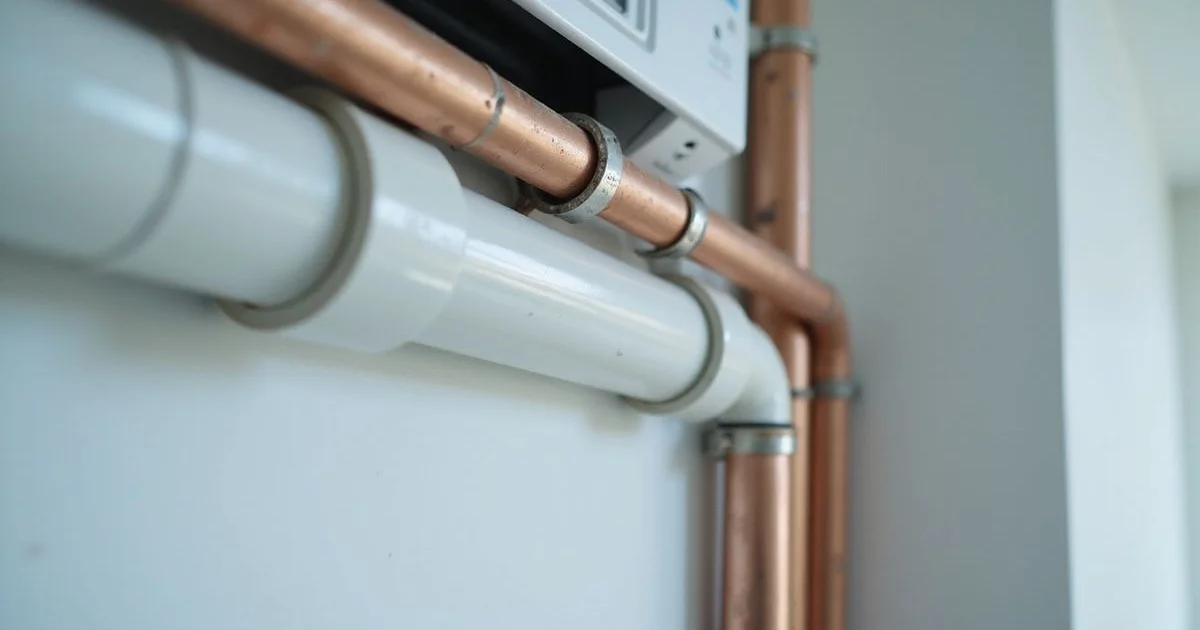
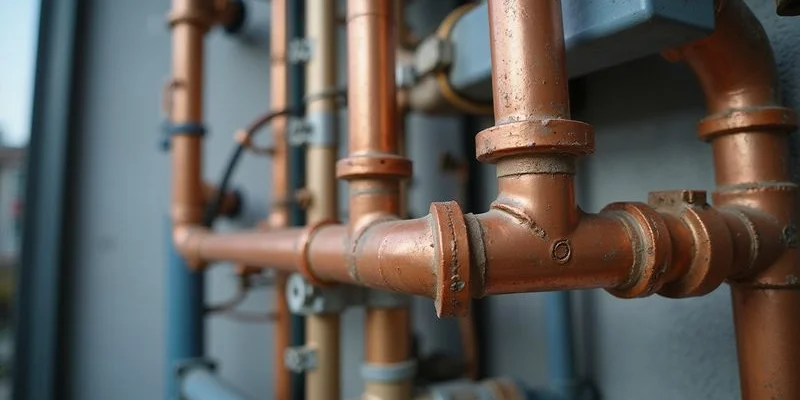
The most critical components in your cooling system are the copper lines. Every split setup relies on two distinct copper pathways.
- Liquid Line (Small Pipe): This thinner tube is typically 6.35mm or a quarter inch in diameter. It transports liquid coolant from the outdoor compressor to your room, feeling warm during normal operation.
- Suction Line (Large Pipe): This thicker conduit measures 9.52mm to 12.7mm across, carrying low-pressure gas back outside. It feels extremely cold and requires heavy-duty insulation to stop condensation.
We always advise clients to verify the thickness of these copper tubes before agreeing to a quote. Modern R32 refrigerant operates at high pressures reaching up to 330 psi. Therefore, using the thicker Standard Wire Gauge (SWG) 22 copper, which is 0.71mm thick, is essential for safety and longevity compared to the older, thinner SWG 23.
Drain Pipe (PVC)
The condensate drainage system channels water from the indoor evaporator tray to an external bathroom or balcony outlet. Installers generally use Class E PVC materials measuring 16mm or 20mm in diameter for residential properties.
While it seems simple, this component requires regular attention. Singapore’s high humidity levels create the perfect environment for a jelly-like bacterial biofilm to grow inside the plastic. A severe blockage here is the leading reason behind aircon water leaking issues, so regular flushing prevents this thick slime from backing up into your bedroom.
Electrical Cable
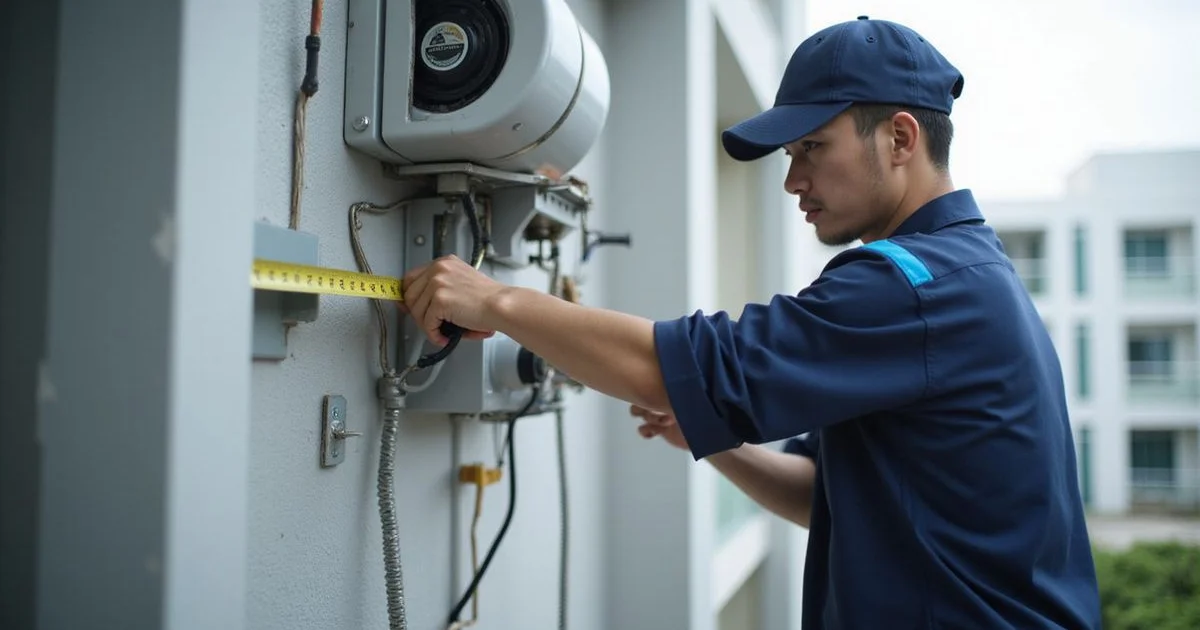
Although technically a wiring component, the communication cable runs tightly alongside the copper tubes. It transmits both power and vital operational signals between your indoor blower and outdoor compressor.
Contractors in Singapore typically use reliable 3-core 40/076 or 4-core cables from trusted brands like Keystone or Sigma. A high-quality, weather-resistant wire prevents communication errors that can suddenly shut down your entire system.
Common Piping Problems in Singapore
1. Refrigerant Leaks
Copper networks often lose pressure through several vulnerabilities.
- Corrosion: Salty and humid air aggressively degrades raw copper over time. Homes in coastal areas like East Coast or Pasir Ris often see pinhole leaks develop much faster than inland properties.
- Vibration fatigue: The constant humming of the compressor stresses the joints, leading to micro-cracks.
- Physical damage: Moving furniture or undertaking rough renovation work can easily dent exposed tubes.
- Poor flare connections: If the connecting nuts are poorly tightened during your initial installation, the high pressure will eventually push the gas out.
You will quickly spot signs of low gas when these microscopic holes appear. Expect reduced airflow, icy build-up on the coils, and a sharp spike in your monthly electricity consumption.
2. Insulation Deterioration
The freezing suction line relies entirely on its foam jacket to stop ambient moisture from turning into water droplets. Our technicians frequently see this foam degrade due to harsh sunlight and general aging.
Pests like rats or cockroaches can also chew through the material. When gaps appear, the exposed cold metal immediately causes condensation dripping right onto your walls or flooring.
Many cheap quotes use thinner 3/8-inch foam, but this is inadequate for our tropical climate. We strongly recommend upgrading to half-inch (12.7mm) thick closed-cell rubber insulation from top brands like Armaflex or Superlon. For further technical specifications, please consult our dedicated insulation guide.
3. Blocked Drain Pipe
Your plastic water outlet is highly susceptible to stubborn blockages from several sources.
- Biofilm build-up: This jelly-like bacteria thrives in damp environments and quickly chokes the flow.
- Dust accumulation: Airborne particles mix with the water to create thick mud.
- Insect nests: Wasps and ants frequently build homes inside the open end of the tube, creating a pest intrusion issue.
- Improper gradients: A poorly angled line traps stagnant water, accelerating algae growth.
Pro-Tip: A simple wet vacuuming during standard servicing might not clear hardened jelly. We often deploy a targeted chemical flush using products like Mr McKenic to fully dissolve the blockage.
4. Pipe Sagging
Over extended distances, heavy copper lines will inevitably bow downwards if they lack adequate support. Installers must secure brackets every 1.2 to 1.5 metres along the wall to maintain a perfectly straight run.
A sagging tube creates a low spot where compressor oil gets trapped instead of circulating. This pooling starves the outdoor motor of lubrication and severely restricts the cooling efficiency of the whole system. In drainage setups, a sag forms a permanent puddle that breeds mold within weeks.
5. Kinked Pipes
Copper is a soft metal that easily folds inward if an installer bends it too aggressively around a tight corner. A kink acts exactly like a squeezed garden hose, heavily restricting the flow of vital coolant.
Even a minor fold can force your compressor to work much harder to push the fluid through. This excessive strain can reduce your cooling capacity by up to 20 percent and will drastically shorten the lifespan of your expensive outdoor unit.
Pipe Sizing and Your Aircon
Selecting the correct diameter for your tubes is a strict engineering requirement, not just a casual suggestion.
| Unit Capacity | Liquid Line | Suction Line |
|---|---|---|
| 9,000 BTU (1HP) | 6.35mm (1/4”) | 9.52mm (3/8”) |
| 12,000 BTU (1.5HP) | 6.35mm (1/4”) | 9.52mm (3/8”) |
| 18,000 BTU (2HP) | 6.35mm (1/4”) | 12.7mm (1/2”) |
| 24,000 BTU (2.5HP) | 9.52mm (3/8”) | 15.88mm (5/8”) |
Using pipes that are too small creates a massive pressure drop and forces the system to overwork. Conversely, using oversized tubes slows down the gas velocity, preventing essential lubricating oil from returning to the motor.
Our team strictly follows the manufacturer specifications for sizing. Using mismatched diameters will immediately void your standard 5-year compressor warranty.
Pipe Length Considerations for HDB and Condos
The physical distance between your room and the outdoor compressor heavily dictates how well the machinery performs.
- Maximum permitted length: Residential setups generally top out at 15 to 20 metres of total routing.
- Vertical limits: The height difference between the indoor and outdoor hardware should not exceed 10 metres.
- Efficiency drop: You lose approximately 2 to 3 percent of cooling power for every 5 extra metres of distance.
- Refrigerant top-ups: Systems come factory-charged for about 5 to 8 metres, meaning longer routes require a precise manual gas top-up.
Most modern HDB Build-To-Order (BTO) flats feature dedicated external ledges, keeping distances nicely under 10 metres. Condominiums, however, often place the compressors on distant centralized decks, requiring careful pressure calculations.
When to Replace Aircon Piping
Replace If:
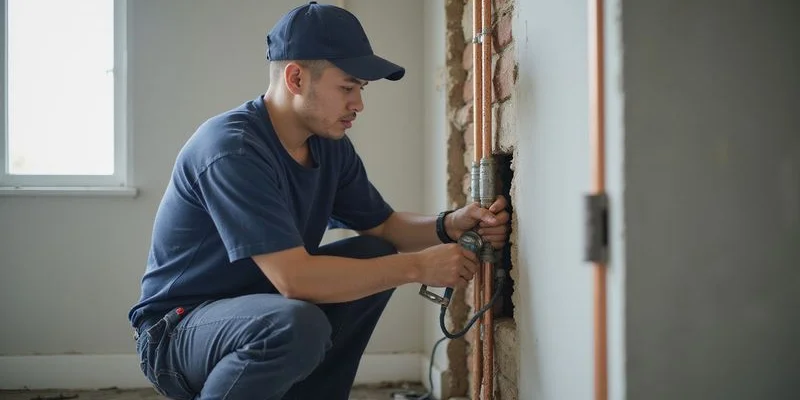
Sometimes, repairing an old setup is a poor financial decision. You should demand a complete replacement under these specific conditions.
- Multiple leaks occur: Patching a heavily corroded network is a losing battle, and new pinholes will simply appear elsewhere.
- Materials exceed ten years: A decade of exposure to Singapore’s climate degrades copper significantly, making proactive replacement a smart investment.
- Switching gas types: Upgrading an old R22 system to a modern R32 model requires new lines, as the leftover incompatible oil will destroy the new compressor.
- Insulation is crumbling: Stripping and re-wrapping an entire concealed run often costs more in labor than simply laying fresh, pre-insulated tubes.
- Severe kinks exist: A crushed metal tube cannot be perfectly rounded out again, meaning the weak spot remains a permanent hazard.
Keep If:
You do not always need to tear apart your false ceilings during an upgrade. Reusing your current infrastructure is perfectly safe if it meets a few strict criteria.
- The materials are less than five years old and visibly clean.
- There is absolutely no history of gas top-ups or patching.
- The black foam jacket remains thick, dry, and fully intact.
- A technician performs an R141b chemical flush to remove old oil residue.
- A high-pressure nitrogen test confirms zero pressure loss over 24 hours.
Pipe Installation Best Practices
We refuse to cut corners during the critical setup phase. The installation teams strictly follow these industry-leading procedures to guarantee a flawless finish.
- Premium copper grades: Technicians exclusively source SWG 22 (0.71mm) materials to safely handle the high pressure of modern R32 cooling gas.
- Precision flaring: Calibrated eccentric flaring tools create perfectly smooth, leak-free joints.
- Nitrogen brazing: Pumping nitrogen through the lines while welding prevents dirty oxidation flakes from forming inside the tubes.
- Pressure validation: Installers pressurize every new network to 400 PSI and monitor it for a minimum of 30 minutes before releasing any coolant.
- Firm support: Heavy-duty brackets placed every 1.2 to 1.5 metres completely eliminate the risk of sagging.
- Thick insulation: Half-inch Armaflex or Superlon foam jackets protect both the liquid and suction pathways.
- Protective trunking: High-quality PVC casing encloses all indoor runs for maximum aesthetic appeal and physical protection.
Billy Aircon Piping Services
Whether you are dealing with a mysterious drip or planning a major home renovation, the experienced crew is ready to assist.
- Electronic leak detection: Advanced sniffers and 400 PSI nitrogen tests pinpoint invisible gas escapes.
- Insulation upgrades: Technicians strip away rotting foam and apply brand-new, half-inch closed-cell rubber jackets.
- Jelly removal: Strong chemical flushes instantly dissolve biological blockages in your drainage system.
- Complete replacements: Installers lay fresh SWG 22 copper pathways, complete with precision flaring and rigorous pressure checks.
- New setups: Planners design and route highly efficient networks for all new aircon installations.
We protect every single piece of replacement work with a comprehensive 90-day workmanship warranty. This guarantee gives you complete peace of mind.
Get Your Piping Checked
Mastering Aircon Piping: Types, Common Problems & When to Replace gives you a massive advantage as a property owner. Ignoring a minor drip or a slight drop in cooling power usually leads to massive repair bills down the road, so addressing these warning signs early will save your compressor and protect your home.
If you suspect your setup is failing, do not wait for a complete breakdown. WhatsApp the service team at +65 9456 0875 to schedule a professional diagnostic check today. We service every neighborhood in Singapore and can usually resolve emergency flow issues on the very same day.