The Signs Your Aircon Is Low on Gas (And What to Do)
You probably know the frustration of setting your thermostat to 18°C, only to feel a lukewarm breeze circulating through the room. A dropping refrigerant level is often the hidden culprit behind this sudden loss of cooling power. We see this specific issue daily across HDB flats and commercial spaces in Singapore.
Many homeowners assume that refrigerant simply burns off over time like petrol in a car. That is actually a complete myth. Your air conditioning unit operates as a closed, sealed system designed to hold its original charge for its entire lifespan.
If the system is running low, a physical leak has developed somewhere along the copper piping or within the internal coils.
Our team at Billy Aircon checks these pressure levels during every single service visit. Today, I will cover the exact Signs Your Aircon Is Low on Gas (And What to Do) to restore your cooling capacity permanently.
The 8 Telltale Signs of Low Gas
1. Reduced Cooling Performance
We know that a standard 9,000 BTU bedroom unit needs its full charge to lower a Singapore room to a comfortable 24°C. A 20% drop in refrigerant can easily slash that cooling capacity by a third. The air might feel slightly cool, but the room simply never reaches your desired target.
This happens because there is less liquid available to absorb heat from your indoor space.
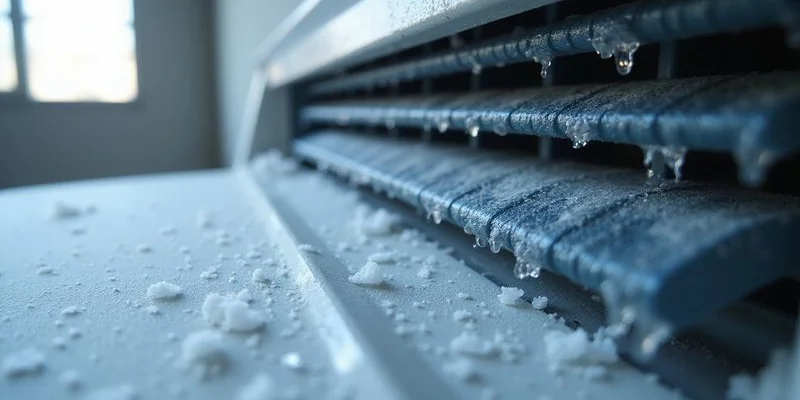
2. Ice or Frost on the Evaporator Coil
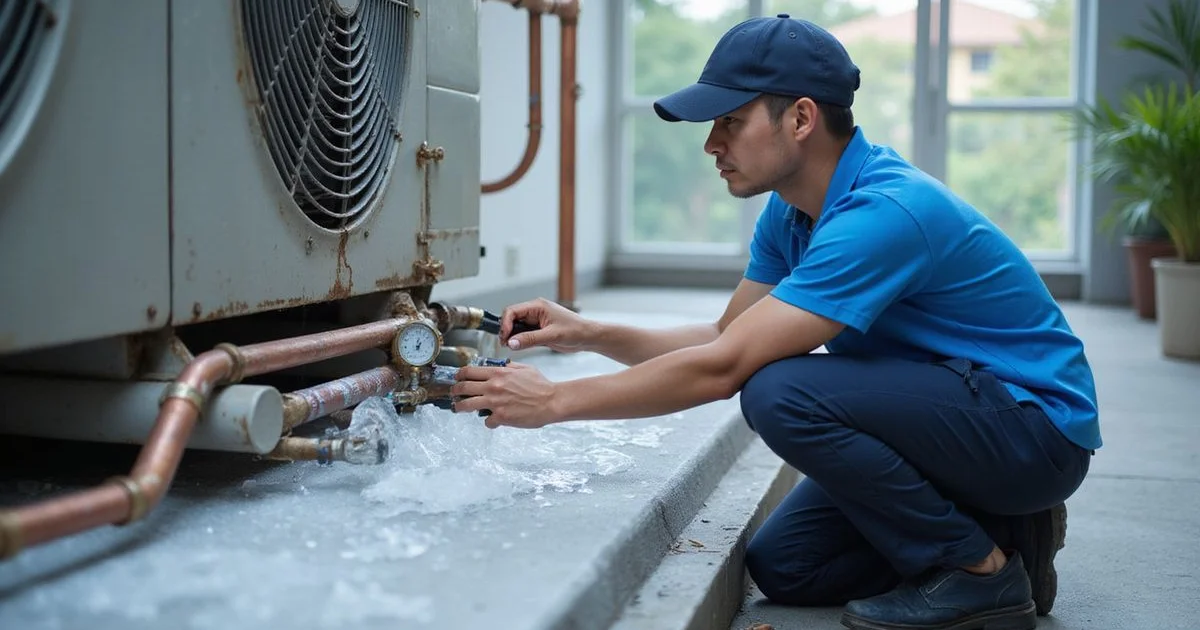
If you flip up the front cover of your indoor unit, you might spot white ice crystals forming on the aluminium fins behind the filters. This freezing happens because a lower volume of gas creates an abnormal drop in pressure. The temperature of the coil plummets below zero degrees Celsius, turning normal condensation into solid ice.
We often see this escalate quickly on popular models from Daikin and Mitsubishi Starmex. The ice forms an insulating barrier over the metal, blocking heat transfer completely.
3. Longer Running Times
Modern inverter air conditioners are programmed to reduce compressor speed once the room reaches the set temperature. A lack of refrigerant forces that inverter to run at maximum capacity without ever spinning down. A healthy unit usually hits 24°C in about 15 to 20 minutes.
Now, the machine runs for a full hour while the room remains stuck at a sweaty 28°C. Our technicians regularly log these excessive run times during diagnostic checks.
4. Higher Electricity Bills
That continuous running time creates an immediate spike in your power consumption. The SP Group electricity tariff for early 2026 sits around 29.11 cents per kWh including GST.
If your monthly utility bill suddenly jumps by $30 to $50 without any new appliances, an overworked compressor is a highly probable suspect. One single unit struggling to satisfy the thermostat will waste a massive amount of power.
5. Warm Air From the Vents
In severe cases, the indoor blower simply acts like an expensive desk fan. The internal thermistor sensors cannot register the expected temperature drop across the coil.
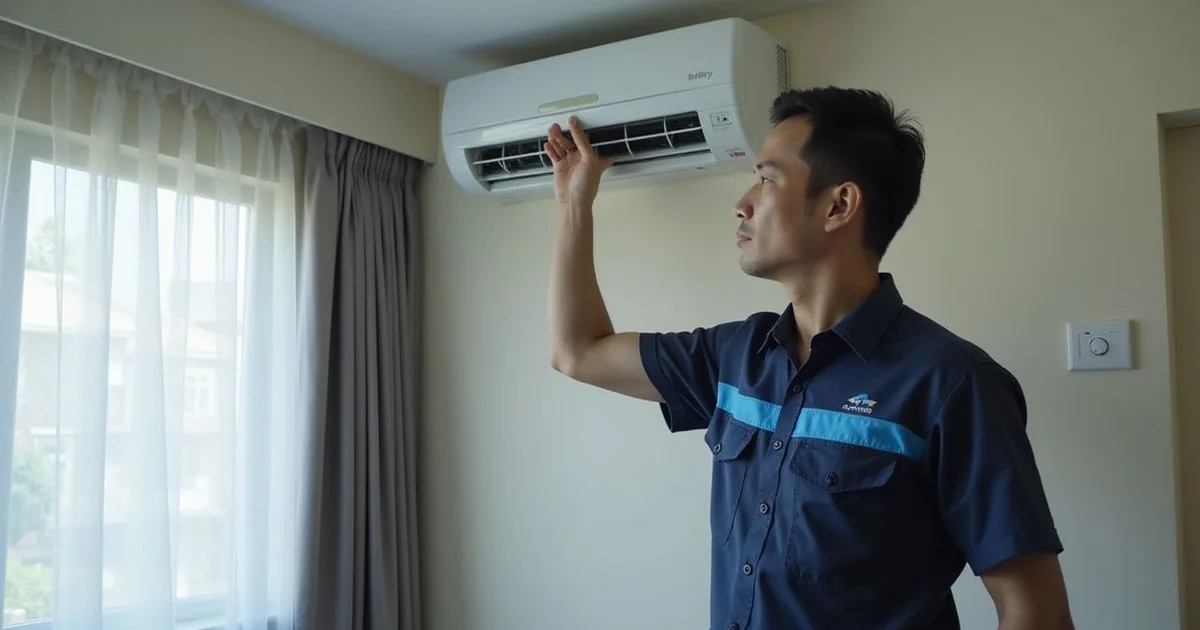
You will place your hand near the louvres and feel 30°C room air blowing right back at you. We consider this the final stage of depletion before the system shuts down on an error code.
6. Water Dripping or Leaking
That ice we mentioned earlier eventually melts when the machine cycles off. The sudden rush of water quickly overwhelms the plastic drainage pan, causing a mess down your wall.
You need to address water dripping immediately in a residential setting. A neglected dripping compressor outside your HDB flat can trigger neighbor complaints and a potential fine of up to $1,000 from the NEA under the Environmental Public Health Act.
7. Unusual Sounds
A healthy flow of refrigerant is nearly silent as it cycles through the copper lines. A depleted system often produces a distinct hissing or bubbling noise near the indoor unit.
This sound occurs because the electronic expansion valve is struggling to process a messy mixture of liquid and vapour. You will usually notice this annoying hiss late at night when the house is quiet.
8. Outdoor Unit Behaviour
You can actually perform a quick physical check on the outdoor condenser yourself. The larger copper discharge pipe should feel distinctly warm to the touch during normal operation.
If that thick pipe feels lukewarm or completely cold, the compressor is starved of the medium it needs to reject heat. Our diagnostics always include this rapid tactile test as a baseline.
Confirming Low Gas: What a Technician Checks
Gas Pressure Reading
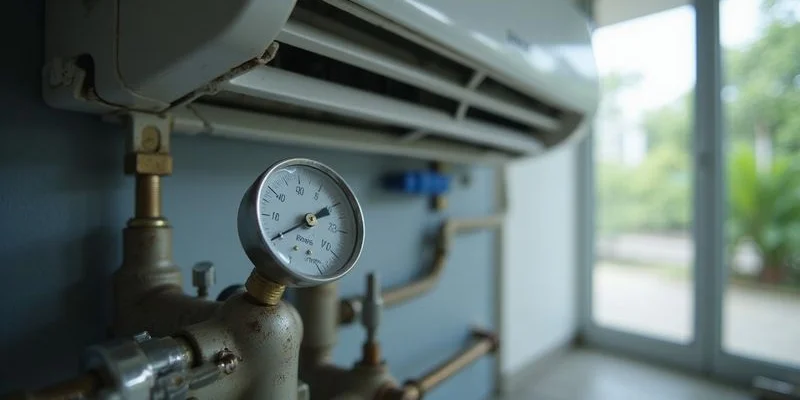
Our specialists connect a digital manifold gauge directly to the service port on the condenser. Each chemical compound requires a very specific operating range to function safely.
For a modern R32 system, we look for a low-side pressure reading between 110 and 130 psi. Anything falling below that baseline gives us a clear confirmation of a leak.
Temperature Differential
We also calculate the exact difference between the air entering the top of the unit and the air blowing out the bottom. This measurement is known in the trade as the Delta T.
A fully charged system should produce a temperature drop of exactly 8°C to 12°C. A narrow gap of just 3°C or 4°C proves the coils are not absorbing thermal energy.
Superheat and Subcooling
We take precision temperature readings at both the evaporator and the condenser to calculate superheat. A healthy superheat value normally sits between 5°C and 8°C.
These calculations help us rule out other tricky issues. A restricted filter drier can closely mimic the exact same symptoms as a leaking pipe.
What to Do When Your Gas Is Low
Do Not Keep Running the Unit
Forcing a starved machine to keep cooling will eventually destroy the compressor. The refrigerant actually acts as a transport vehicle for the lubricating oil that protects the moving parts.
Without that oil, the metal components overheat and seize up entirely. A full compressor replacement in Singapore will easily cost you between $600 and $1,200 in 2026.
Contact a Professional
You cannot just hook up a generic canister and hope for the best. The NEA mandates that only certified technicians handle these controlled chemical compounds.
Our comprehensive gas top-up service includes mandatory pressure testing to secure the system. The process pinpoints exactly why the level dropped before adding a single ounce of new chemical.
Do Not Mix Refrigerant Types
You must never mix older compounds with modern replacements. The current standard is R32, which operates at different pressures and is classified as mildly flammable.
Pumping the wrong chemical into an older R22 or R410A system will cause catastrophic mechanical failure. We verify the exact technical specifications on the manufacturer data plate before proceeding.
Why Simply Topping Up Is Not Enough
Many budget contractors will happily charge you $80 for a quick top-up and disappear. That added pressure will just escape through the exact same microscopic hole a few weeks later.
You end up paying hundreds of dollars for repeated visits while the compressor suffers continuous wear and tear. We refuse to apply a temporary bandage to a permanent flaw.
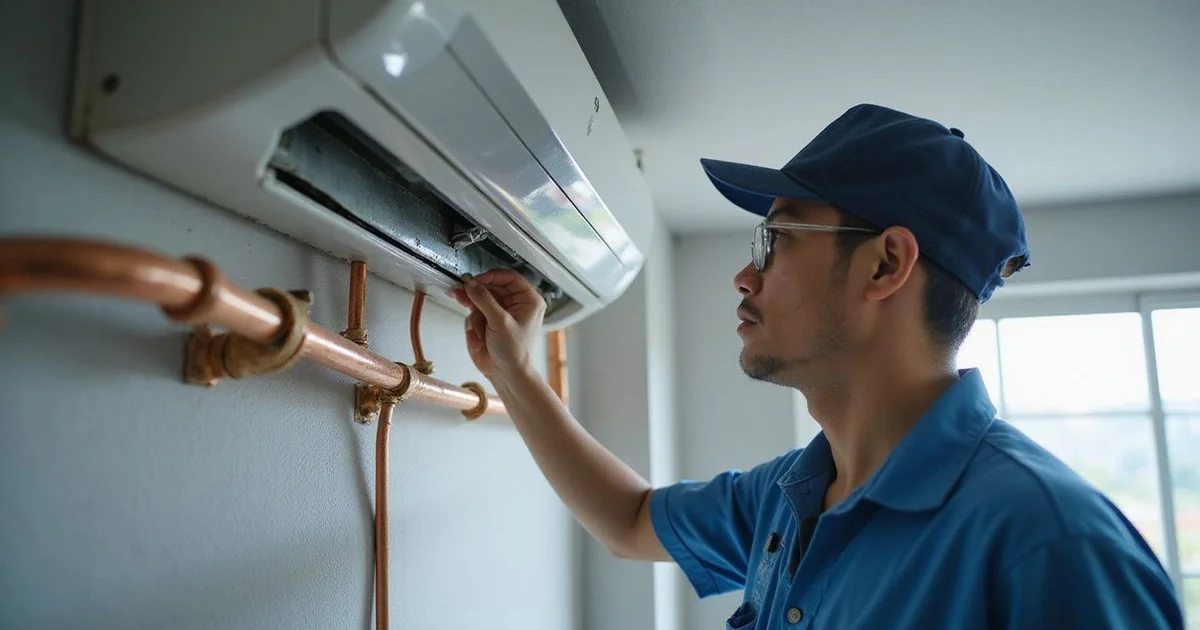
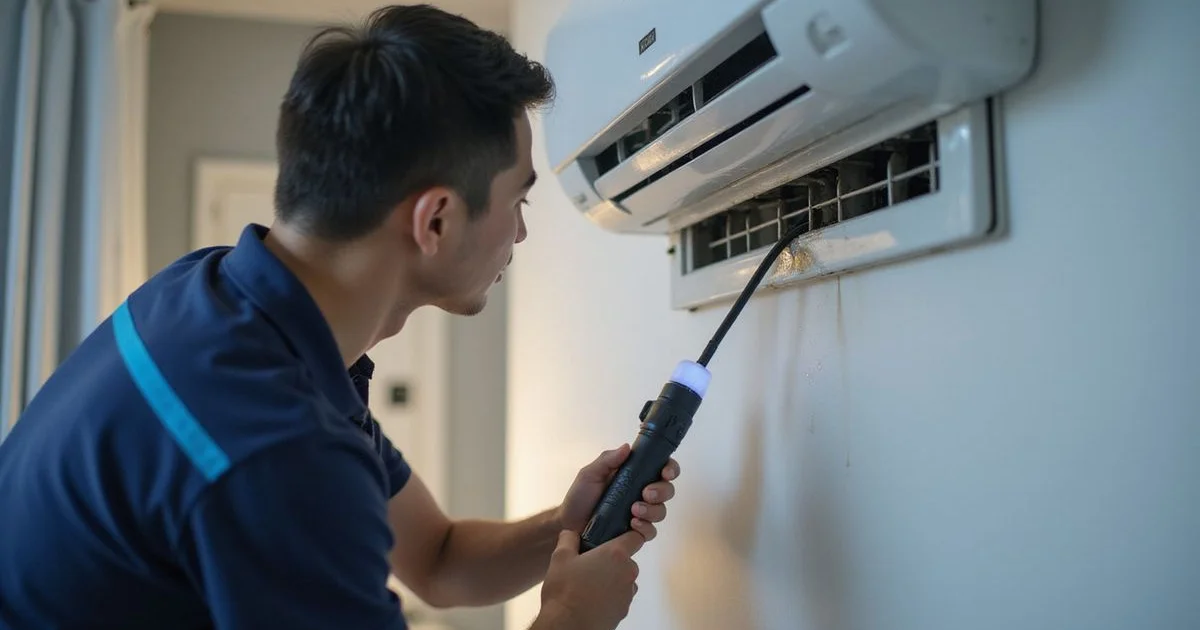
Using sensitive electronic leak detectors helps trace the exact leak source along the flare joints. Fixing that copper connection once is vastly cheaper than buying endless tanks of replacement chemical.
Here is a clear breakdown of the two approaches:
| The Quick Top-Up Approach | The Find and Fix Approach |
|---|---|
| Temporary fix lasting 1 to 3 months | Permanent restoration of the sealed system |
| Repeated call-out fees adding up over time | Higher upfront cost, but zero recurring fees |
| Compressor suffers from poor lubrication | Compressor lifespan is fully protected |
| Continuous environmental damage from venting | Zero illegal emissions into the atmosphere |
Gas Top-Up Frequency
A properly installed and sealed air conditioning network should never require a top-up. The copper piping hidden in your HDB trunking is built to last 10 to 15 years without losing a single gram of pressure.
If another company tells you that annual refills are just standard maintenance, you should request a second opinion immediately. A drop in pressure only happens under a few specific conditions:
- A poorly tightened flare connection at the indoor or outdoor unit.
- Corrosion eating microscopic holes through the aluminium evaporator coils.
- Accidental physical damage to the exposed copper pipes outside.
- A failing Schrader valve core leaking at the main service port.
Preventing Low Gas Issues
The most effective strategy is to catch a micro-leak before it drains the entire system. We test the standing and running pressures during every single routine visit to map out the health of your equipment.
- Book routine quarterly aircon servicing to keep a close eye on the baseline pressures.
- Ensure your initial installation is handled by highly rated, certified professionals.
- Request thick Armaflex insulation around the pipes to prevent sweating and early corrosion.
- Turn off the machine immediately if the cooling power drops to save the compressor.
Get Your Gas Checked Today
You do not have to sweat through another humid night wondering if your system is failing. Catching a pressure drop early can save you from a massive repair bill down the line.
We have fully equipped vans ready to deploy across every neighborhood in Singapore. Certified technicians will find the root cause, present the exact data, and restore your comfort safely.
WhatsApp Billy Aircon right now at +65 9456 0875 to schedule a priority diagnostic check. Every single leak repair and recharge we complete is backed by a solid 90-day warranty for your total peace of mind.