What Is an Aircon Gas Leak?
We often see homeowners puzzled by cooling failures, looking for clear answers about an aircon gas leak. This frustrating issue usually points to a hidden breach within the sealed copper piping. The refrigerant is actually designed to circulate indefinitely without ever getting consumed.
Our technicians find that dropping gas levels always indicate a physical breach in the system.
A complete loss of this gas transforms your expensive cooling unit into a very basic fan. You will also notice a sharp spike in your monthly utility costs as the system overworks.
We founded Billy Aircon back in 2003, and today our 26-member team handles these specific repairs daily across Singapore.
The recent industry shift to R32 refrigerants makes proper leak detection more important than ever. These modern gases operate at roughly 1.6 times the pressure of older types, meaning tiny weak points can quickly turn into major leaks.
Warning Signs of an Aircon Gas Leak
1. Aircon Is Not Cooling Properly
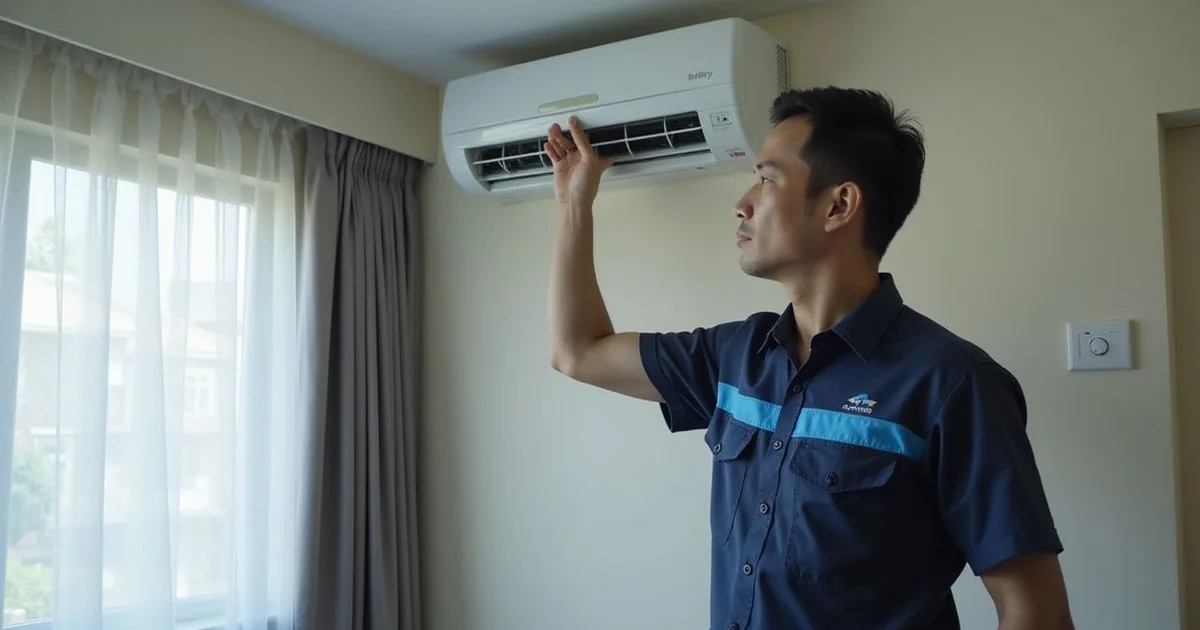
We consider a lack of cold air to be the most common and immediate red flag. A healthy system should create a temperature drop, known as Delta T, of about 8 to 10 degrees Celsius between the return air and the supply air. When refrigerant levels drop, the remaining gas simply cannot absorb enough heat from the room.
Our teams frequently respond to aircon not cold complaints only to discover a severe pressure drop. You might keep lowering the remote setting, but the room will not get any cooler. This lack of performance happens because the vital heat transfer process is broken.
2. Ice Forming on the Evaporator Coil
We often find a thick layer of frost behind the indoor unit filters during our inspections. This happens because low gas levels cause the pressure in the evaporator coil to plunge below normal operating ranges. The remaining refrigerant expands too rapidly and drops below the freezing point of zero degrees Celsius.
Our customers sometimes spot this ice through the front panel before they even notice a temperature change. The freezing effect severely restricts airflow and puts immense strain on the blower motor. Left unchecked, this ice buildup can eventually damage the delicate aluminum fins.
3. Hissing or Bubbling Sounds
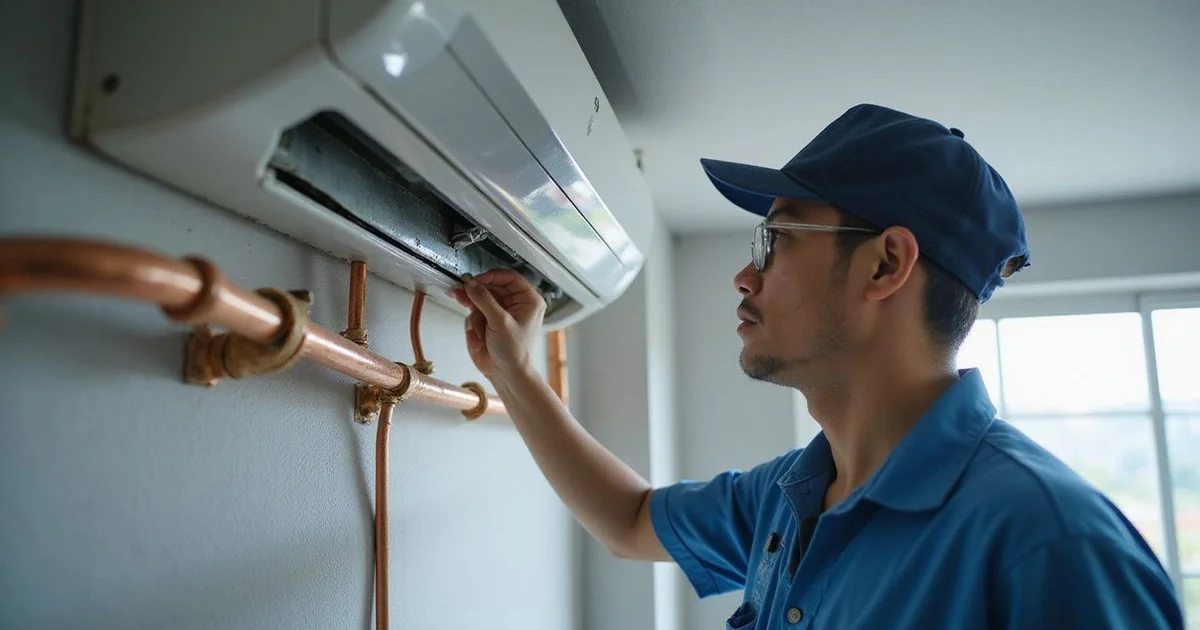
We always advise listening closely to your copper piping if you suspect an issue. A gas leak sometimes produces an audible hissing noise where the high-pressure refrigerant escapes through a tiny crack. These cracks frequently develop near the brass flare nuts connecting the indoor and outdoor units.
Our leak detection specialists also listen for faint bubbling sounds if the breach is near a joint sealant. The noise is most noticeable immediately after turning the system off when the pressure begins to equalize. Any strange noises from the piping warrant an immediate professional inspection.
4. Higher Electricity Bills
We constantly remind homeowners that ignoring a leak gets expensive very quickly. A unit starved of gas works much harder and runs almost continuously to achieve the desired room temperature. The current SP Group electricity tariff in Singapore sits around 29 to 32 cents per kilowatt-hour for 2026.
Our calculations show that a constantly running compressor can easily add 50 to 100 dollars to your monthly utility bill. This increased runtime translates directly to wasted money and unnecessary carbon emissions. Fixing the leak is often cheaper than paying the penalty of a soaring energy bill over several months.
5. Water Leaking from the Indoor Unit
We frequently trace severe indoor water puddles straight back to a refrigerant issue. That thick layer of ice on the evaporator coil eventually melts when the system cycles off. The resulting flood of water easily overwhelms the shallow drainage tray.
Our technicians see this exact chain of events causing major water leaking problems that damage false ceilings or parquet floors. You should always treat dripping water combined with weak airflow as a major warning sign. The combination of ice and water creates an ideal breeding ground for mold if left untreated.
6. Warm Air from Vents
We consider a unit blowing purely warm air to be a worst-case scenario. This symptom indicates that almost all the R32 or R410A gas has escaped the system entirely. The air conditioner essentially transforms into a very expensive, energy-hungry wall fan.
Our repair crews know there is absolutely zero heat absorption happening in this state. Running the system in this condition provides no comfort and causes severe internal damage. Turn the unit off immediately at the isolator switch if you feel warm air blowing from the louvers.
7. Compressor Running but Not Cooling
We always warn clients about the hidden dangers of a running, non-cooling compressor. If the outdoor condensing unit hums away loudly but the indoor unit produces nothing cold, the system is starving. The compressor desperately relies on the returning cool refrigerant gas to lubricate its moving parts and prevent overheating.
We have seen countless units burn out completely because they were left running dry. Operating without this vital cooling effect is highly dangerous for the internal mechanical components. A quick response here can save you from a massive replacement bill.
What Causes Aircon Gas Leaks?
Vibration and Wear
We notice that years of daily operation naturally take a toll on mechanical joints. The constant vibration from the rotary compressor and powerful fan motors slowly loosens tight connections. The brass flare connections at both the indoor and outdoor units are highly vulnerable to this shaking.
Our maintenance teams often find that a quick tightening of these nuts prevents major issues later. Metal fatigue eventually sets in on older pipes after thousands of heating and cooling cycles. Regular checks help catch this gradual wear before a complete blowout occurs.
Corrosion
We deal with severe copper corrosion daily due to Singapore’s humid and salt-laden coastal air. A specific chemical reaction called formicary corrosion creates microscopic pinholes from the inside out. Volatile organic compounds from common household items like cleaning sprays, air fresheners, and perfumes mix with condensation to attack the copper.
Our leak detectors often pick up these tiny, silent leaks that are completely impossible to hear. This ant-nest style of corrosion slowly eats away at the evaporator coil over several years. Applying a protective anti-corrosion coating during major servicing helps extend the lifespan of the metal.
Poor Installation
We constantly fix issues stemming from rushed or sloppy initial setup work. A proper installation requires precise tools, particularly a torque wrench to tighten flare nuts accurately. If a technician uses too much force, the copper cracks, but too little force leaves a microscopic gap for the high-pressure R32 gas to escape.
Our installers strictly follow the manufacturer specification of 14 to 18 Newton-meters for standard quarter-inch liquid pipes. Kinked pipes hidden behind walls also create weak points that inevitably split open under pressure. Choosing an experienced installer is the best defense against these early failures.
Physical Damage
We sometimes arrive at homes to find pipes dented or crushed by sheer accident. Renovation work, careless ladder placement, or heavy items shoved against the outdoor compressor can easily crack the soft copper lines. Even aggressive chemical cleaning by untrained workers can damage the fragile aluminum fins and underlying tubes.
Our advice is to always leave a clear buffer zone of at least half a meter around the outdoor unit. This simple precaution prevents accidental impacts and ensures proper airflow for heat rejection. Any visible dent in the piping requires a quick assessment to confirm its integrity.
Manufacturer Defect
We occasionally discover deep-seated flaws that originate straight from the factory floor. A manufacturing defect in the brazed joints or a weakly stamped evaporator coil can cause premature failure within the first year. This situation is incredibly rare but tends to happen more frequently in cheaper, unbranded units.
Our warranty support team helps clients navigate these frustrating factory faults smoothly. Reputable brands usually catch these issues during their final quality control pressure tests. Always register your warranty immediately after purchase to protect against these uncommon defects.
Dangers of Ignoring a Gas Leak
Compressor Damage
We consider the compressor to be the undisputed heart of your entire cooling setup. This component is incredibly expensive to buy, often costing between 600 and 1000 dollars to replace in Singapore. Low refrigerant creates a cascade of devastating mechanical problems inside this vital part.
Our technicians regularly see compressors destroyed by several specific low-gas conditions. The lack of refrigerant strips away essential lubrication, as the gas carries the compressor oil. Internal components quickly suffer from these specific threats:
- Severe overheating: Extended run times cause temperatures to spike.
- Valve damage: Unpredictable pressures force liquid refrigerant into the mechanical parts.
- Friction wear: Moving parts grind together without the oil barrier.
Higher Running Costs
We always point out the harsh financial reality of operating a compromised system. A unit starved of its cooling medium draws significantly more amps to achieve inferior results. You are effectively paying a premium utility rate for a room that remains uncomfortably warm.
Our energy audits show this inefficiency easily wastes hundreds of dollars over a single hot season. The longer the machine runs to hit its target, the higher the SP Group bill climbs. Prompt action stops this daily financial drain immediately.
Environmental Impact
We take the safe handling of chemical refrigerants extremely seriously. Modern gases, while better than old ozone-depleting types, are still potent greenhouse contributors regulated by the National Environment Agency. The common R410A gas has a global warming potential 2,088 times greater than carbon dioxide.
Our crews ensure every repair minimizes the release of these chemicals into the atmosphere. Even the newer R32 gas has a warming potential of 675, meaning leaks carry a real ecological cost. Repairing a small hole promptly is the most responsible action for both your wallet and the environment.
What to Do If You Suspect a Gas Leak
We highly recommend following a strict protocol the moment you suspect a problem. Quick, decisive action is the best way to prevent secondary mechanical damage. Following these steps will keep your repair costs as low as possible.
Step 1: Stop Using the Aircon
Our first instruction over the phone is always to shut the unit down completely. Turn off the power directly at the wall isolator switch to prevent the compressor from trying to start. Continuing to run a dry system guarantees catastrophic internal damage.
We assure you that using a standalone floor fan for a few days is far cheaper than funding a 1000-dollar compressor replacement. Letting the system rest gives the remaining oil a chance to settle safely. This immediate shutdown is the most vital step in protecting your investment.
Step 2: Do Not Attempt DIY Repair
Our industry strictly regulates refrigerant handling for safety and environmental reasons. The gas is stored under incredibly high pressure and requires specialized manifold gauges to measure safely. Direct skin contact with escaping liquid refrigerant instantly causes severe frostbite burns.
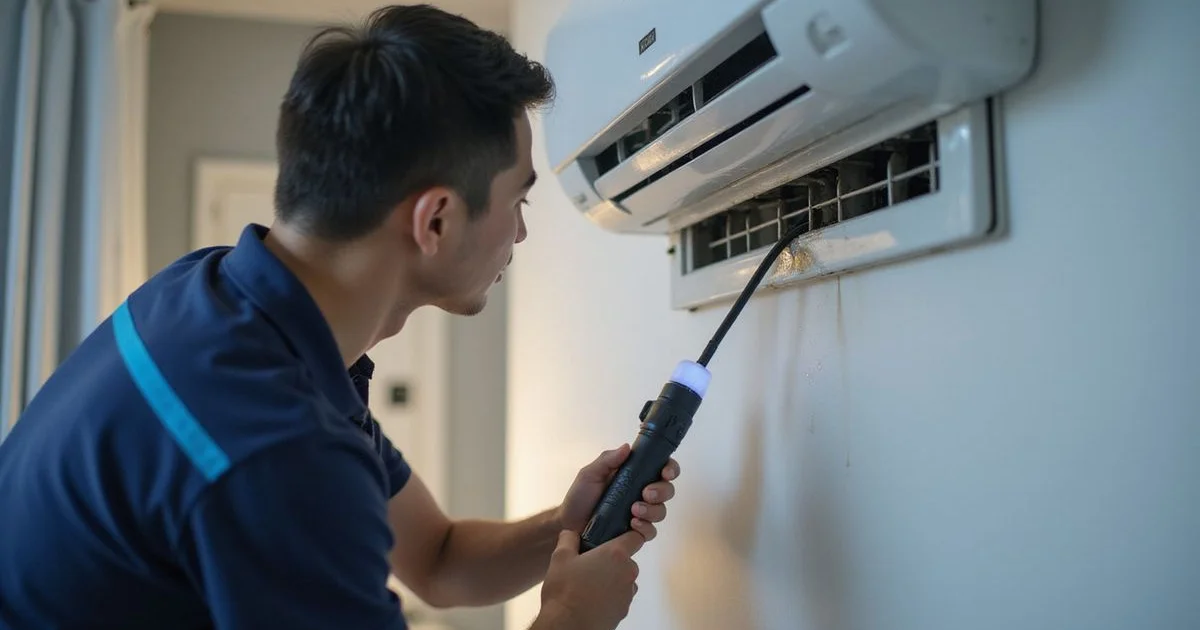
We strongly advise against buying cheap top-up kits online. Proper diagnosis requires professional electronic leak sniffers, like Fieldpiece heated diode detectors, which find leaks as small as 0.1 ounces per year. Blindly adding gas without finding the hole is dangerous and completely pointless.
Step 3: Call a Professional
Our certified technicians are ready to provide a definitive diagnosis of your system. Simply contact Billy Aircon to schedule a comprehensive pressure test. The team uses advanced UV dye and electronic sensors to trace the exact source of the escaping gas.
We emphasize that simply topping up the charge without sealing the breach guarantees the problem will return. A proper diagnosis identifies whether the leak is a tiny pinhole or a major structural crack. This accurate assessment forms the foundation of a permanent, reliable fix.
Step 4: Decide on Repair
Our team will lay out the most practical options based on the exact location of the damage. The best approach depends heavily on whether the pipes are easily accessible or hidden behind false ceilings. Common and effective repair methods include:
- Silver brazing repair: Sealing small holes on straight, accessible pipe sections with high-heat silver brazing.
- Flare re-connection: Cutting and remaking the brass flare joints that have loosened or degraded over time.
- Targeted pipe replacement: Cutting out and replacing a heavily corroded section of the copper line.
- Total coil replacement: Swapping out the entire evaporator or condenser coil if the ant-nest corrosion is extensive.
Gas Leak Repair vs Gas Top-Up
We constantly field questions about whether a simple refill is enough. A basic gas top-up without addressing the root cause is nothing more than a temporary bandage. The cooling performance returns immediately, but that expensive chemical will silently vanish all over again.
Our standard policy is to locate and permanently seal the hole before adding fresh refrigerant. While a quick refill might cost around 50 to 80 dollars, doing it three times a year quickly exceeds the price of a proper 150 to 300 dollar repair. Sealing the breach is always the most cost-effective decision for the long run.
| Approach | Short-term Result | Long-term Consequence |
|---|---|---|
| Top-up only | Cooling temporarily restored | Gas leaks out again within weeks |
| Leak repair + top-up | Cooling completely restored | Problem solved permanently |
| Ignore issue entirely | Rapidly worsening performance | Expensive compressor failure |
How Billy Aircon Handles Gas Leaks
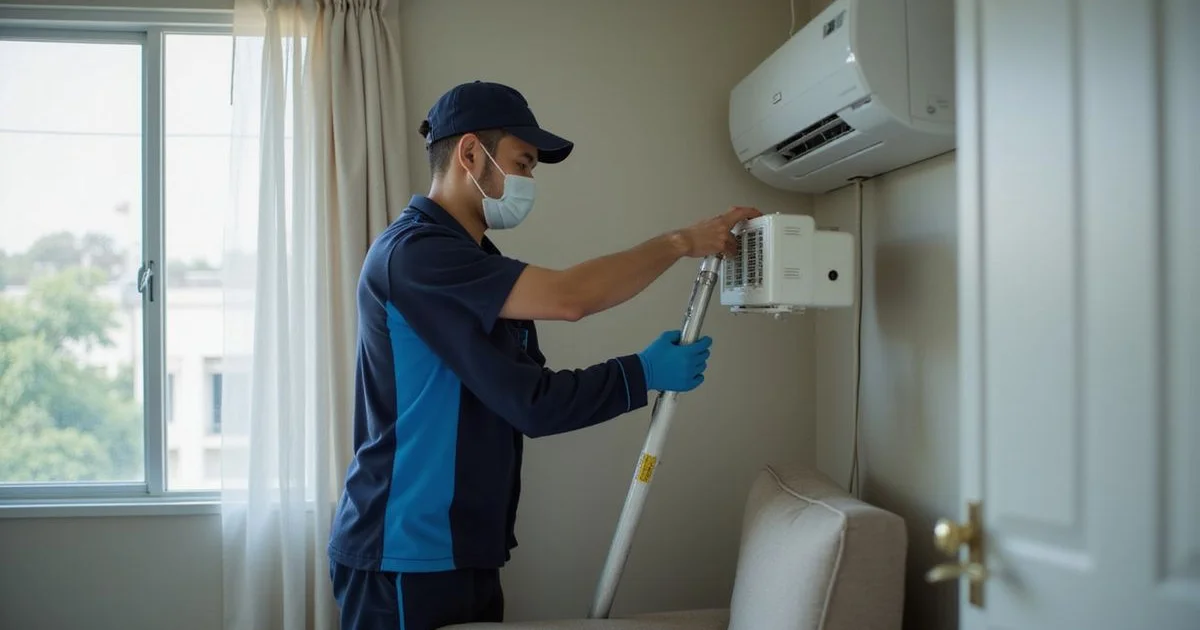
We have refined a highly precise, six-step methodology to resolve these issues safely. This systematic approach eliminates guesswork and ensures the copper lines are fully sealed. The process guarantees the system operates exactly to factory specifications.
Our technicians strictly follow this comprehensive procedure for every job:
- High-pressure nitrogen test: The lines are pumped with dry nitrogen up to 250 or 300 PSI to expose hidden drops in pressure.
- Precision leak detection: Electronic sniffer wands and specialized micro-bubble solutions pinpoint the exact microscopic hole.
- Permanent repair: The affected section receives a new silver-brazed joint or a freshly cut flare connection.
- Deep vacuum process: A high-powered pump pulls the system down to 500 microns to boil off any trapped moisture.
- Weighed gas charge: A digital scale measures the exact grams of R32 or R410A required by the brand specifications.
- Final performance test: Supply air temperatures and operational pressures are measured to confirm flawless cooling.
This thorough testing ensures no moisture remains inside the pipes to cause future internal rust. Every repair also comes with a comprehensive 90-day warranty that covers both the labor and the fresh charge.
Prevent Gas Leaks
We always encourage proactive maintenance to extend the life of your equipment. While you cannot control natural metal fatigue, regular aircon servicing dramatically reduces the odds of a sudden blowout. A scheduled quarterly checkup is the best defense for homes in humid coastal environments.
Our maintenance packages actively protect your system by including several vital checks:
- Verifying exact operating pressures during every single service visit.
- Inspecting vulnerable brass connections for the first microscopic signs of formicary corrosion.
- Identifying tiny performance drops long before a significant volume of gas escapes.
- Ensuring the outdoor compressor has adequate physical clearance to avoid accidental impacts.
Catching a worn flare nut early costs practically nothing compared to replacing a seized compressor. Consistent cleaning also removes the volatile organic compounds that cause the copper to decay from the inside.
Get Your Gas Leak Fixed
We urge you not to delay if you notice poor cooling or hissing sounds. The longer a compromised machine runs, the closer the internal motor gets to a catastrophic failure.
An early inspection preserves your expensive equipment and restores your indoor comfort quickly.
Our skilled technicians are ready to locate and seal the breach using industry-leading tools. Contact the team via WhatsApp at +65 9456 0875 for rapid, reliable detection and repair services across Singapore. Same-day availability is prioritized for HDB flats, private condominiums, and landed estates.