A poorly mounted aircon is more than an aesthetic issue. It is a genuine safety risk in our high-density city.
Our team of 26 at Billy Aircon has spent over two decades keeping Singapore cool and safe.
A slight installation error often leads to excessive vibration, noise, water leaks, and a reduced equipment lifespan.
This Aircon Bracket & Mounting Guide for Singapore covers everything you need to know about securing your units properly. Let us look at the essential wall requirements, the specific brackets you need, and the HDB regulations that keep everyone safe.
Indoor Unit Mounting
Wall-Mounted Units
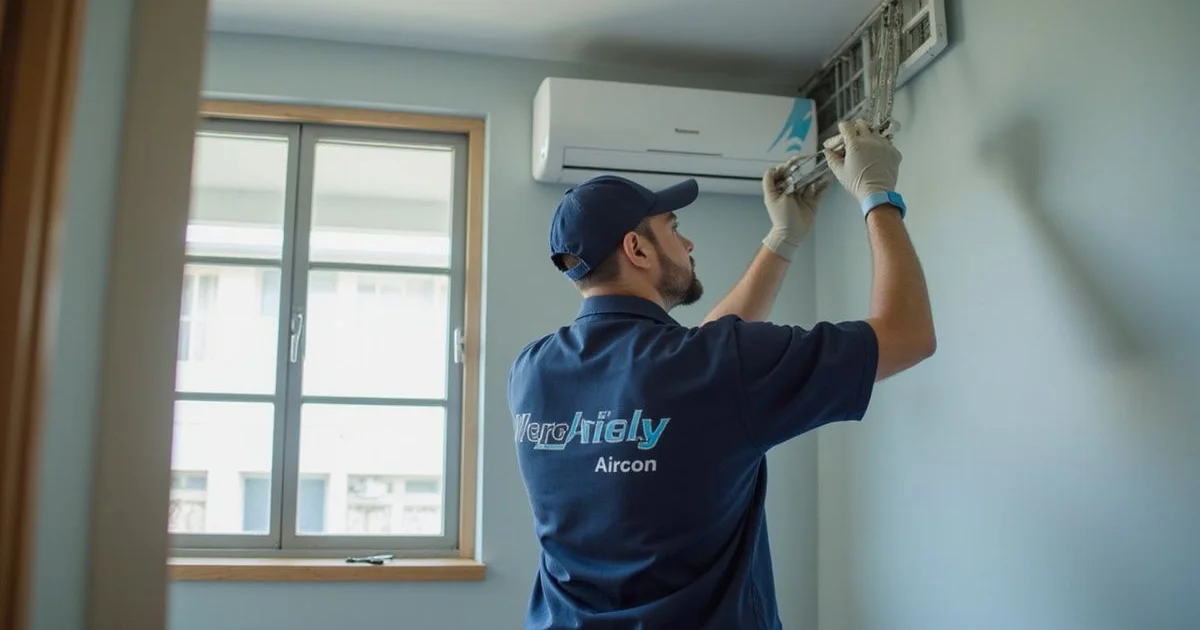
Most homes use standard wall-mounted indoor units. The equipment hangs on a metal mounting plate screwed directly into your room’s wall.
Key requirements involve exact measurements and correct hardware choices.
- Wall strength: Concrete and brick walls handle standard 9 kg to 15 kg units easily. Plasterboard partitions require heavy-duty toggle bolts to prevent the machine from tearing out the drywall.
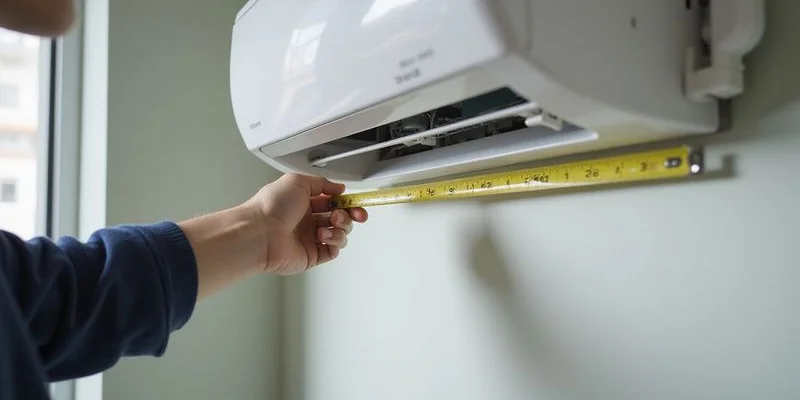
- Height: You get optimal air distribution by mounting the unit at least 2.1 metres from the floor. HDB flats with standard 2.6-metre ceilings do perfectly with a 2.2-metre mounting height.
- Clearance: Proper airflow requires a 15 cm gap above and on the sides of the unit. This space also lets technicians access the filters easily during routine servicing.
- Distance from ceiling: Placing the equipment too close to the ceiling chokes the return air intake. Manufacturers like Mitsubishi and Daikin recommend a minimum 10 cm to 15 cm gap for efficient cooling.
- Tilt: Installers must angle the unit 1 to 2 degrees in the direction of the drainage side. Gravity then pulls the condensation directly into the pipe, preventing massive water leaking across your bedroom floor.
Mounting on Different Wall Types
| Wall Type | Fastener | Notes |
|---|---|---|
| Concrete | Heavy-duty concrete anchors (e.g., Fischer) | Standard in most HDB flats |
| Brick | Premium nylon wall plugs + screws | Standard in older HDB blocks |
| Plasterboard | Toggle bolts or plywood backing | Requires immediate reinforcement |
| Lightweight partition | Not recommended | Consider alternative room placement |
Outdoor Unit Mounting
HDB Outdoor Unit Placement
Singapore flats generally restrict outdoor compressor placement to a few specific zones.
1. Corridor Wall Bracket
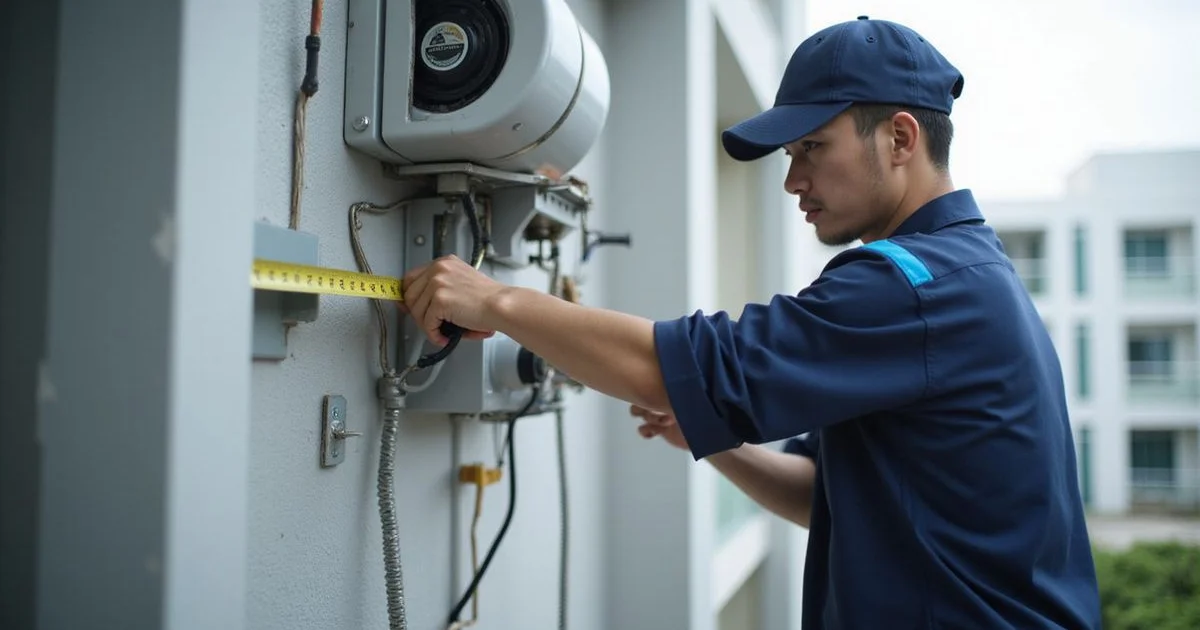
A metal support fixed to the external corridor wall is the most frequent setup. HDB strictly regulates these installations to protect residents walking below.
- Contractors must use approved Stainless Steel Grade 304 or 316 brackets to prevent sudden structural failure.
- The installation must never block the common walkway.
- Technicians must route condensate water to an internal floor trap.
2. Window Bracket (Outdoor)
Certain flat layouts permit mounting units just outside the service yard or kitchen window. Safety demands heavy wall-through bolts instead of basic surface anchors.
- Installations must align with precise HDB external facade rules.
- The unit must sit securely on heavy-duty metal arms.
- Proper PVC drainage pipes must route water away from your downstairs neighbours.
3. Platform or Ledge
Newer Build-To-Order (BTO) flats often feature dedicated concrete aircon ledges. You simply rest the 40 kg to 60 kg compressor on thick rubber anti-vibration pads without drilling any metal brackets into the wall.
Condo Outdoor Unit Placement
Private properties follow strict Management Corporation Strata Title (MCST) guidelines for external equipment.
1. Aircon Ledge
Modern developments provide reinforced structural ledges explicitly designed for heavy multi-split compressors. These concrete floors handle the vibration easily.
2. Condensing Deck
Some luxury developments consolidate all compressors onto a shared rooftop or hidden floor deck. Long copper pipe runs to these central locations will directly impact your total piping costs.
3. Balcony Floor
Placing the compressor directly on the balcony floor remains a popular, cost-effective choice. We elevate these units on heavy-duty rubber blocks to isolate the humming noise from your living room.
Bracket Types and Specifications
Choosing the wrong metal support guarantees a dangerous, rusting hazard within a few years.
Standard Wall Bracket
Basic L-shaped steel supports handle single-split outdoor units perfectly well.
- Material: 3mm thick Stainless Steel Grade 304 is the industry standard for Singapore weather.
- Load capacity: Good brackets comfortably hold up to 150 kg, easily supporting standard 35 kg compressors.
- Mounting: Installers use four heavy-duty concrete drop-in anchors per arm.
- Anti-vibration: Thick rubber mounting blocks sit directly between the metal and the machine base.
Heavy-Duty Bracket
Large System 4 or System 5 compressors require significantly stronger support structures. These units can easily exceed 80 kg.
- Manufacturers add thick steel cross-bracing to prevent metal fatigue.
- Technicians use up to eight distinct anchor points for maximum concrete grip.
- The load rating easily supports multiple heavy compressors.
Ground Stand
Balcony and ledge setups use sturdy floor stands rather than wall mounts. Raising the unit 10 cm stops rainwater from rotting the metal base.
- Better underneath airflow keeps the internal compressor motor cooler.
- Rubberised feet stop the machine from rattling your ceramic floor tiles.
- Elevated units make annual chemical washing much easier for the service team.
Safety Considerations
Every mounting decision directly impacts the lifespan of your cooling system and the safety of your neighbours.
Weight Ratings
Modern outdoor units vary drastically in size. A tiny master bedroom compressor weighs just 25 kg, while a massive commercial multi-split exceeds 90 kg. We strictly match the bracket load rating to the specific machine weight, plus a generous 50% safety margin. Our technicians refuse to cut corners on support hardware.
Corrosion Resistance
High humidity and salty coastal air destroy cheap metal fast. You should inspect your external brackets with a flashlight every single year.
- Only use hot-dip galvanised steel for fully covered ledges.
- Exposed brackets require Stainless Steel Grade 304 or 316.
- Rust streaks on your exterior wall indicate a severely compromised support arm.
Vibration Management
Compressors vibrate intensely at full fan speed. A low hum transmits through the concrete right to your bed if you skip the rubber dampeners. Constant shaking also slowly wiggles anchor bolts loose over five to ten years. Always insist on premium isolation pads.
Drainage Rules
Condensation naturally pours out of the compressor during hot afternoons. Water dripping onto common property leads to immediate resident complaints.
- Stagnant water traps breed Aedes mosquitoes.
- The NEA issues an automatic $200 fine for first-time offenders found breeding mosquitoes in their homes.
- Constant water flow rots away the concrete wall paint below the unit.
HDB Regulations You Need to Know
The Housing & Development Board enforces strict building codes to prevent accidents.
- Trained Installers: Only BCA-certified technicians can safely drill and secure external brackets on high-rise facades.
- Material Rules: All new wall mounts must utilize approved stainless steel to eliminate the risk of severe rust degradation.
- Protrusion Limits: Your compressor cannot stick out past the officially approved distance from the exterior wall.
- Noise Standards: The equipment must operate below the NEA’s 60-decibel limit for residential zones at night.
Enforcement Penalties
Ignoring these building rules creates massive headaches for homeowners.
- HDB will issue formal modification notices forcing you to reinstall the unit correctly at your own expense.
- Inspectors hand out heavy fines for unauthorized corridor obstructions.
- You hold complete legal liability if a poorly secured bracket drops onto public property.
Installation Best Practices
Our experienced team follows a rigid checklist to guarantee complete structural safety.
- Site survey: Technicians test the wall density with specialized scanners before any concrete drilling begins.
- Bracket selection: Installers match the exact compressor weight to a certified Stainless Steel Grade 304 support arm.
- Professional mounting: Heavy-duty Fischer concrete anchors lock the metal firmly into the structural wall.
- Vibration isolation: High-density rubber dampeners sit tightly between the machine base and the metal surface.
- Level check: Technicians use digital spirit levels to ensure perfect horizontal alignment for smooth drainage.
- Indoor unit alignment: The room blower gets a precise 1-degree tilt directing water into the PVC exit pipe.
- Cable management: Weatherproof trunking shields the exposed copper pipes and electrical wires from intense UV rays.
- Final inspection: A senior installer verifies all bolt torques and water flow tests before leaving the site.
Every standard job includes our 90-day workmanship warranty covering the complete structural mounting. We stand behind all our installations because we never compromise on safety hardware.
Need an Aircon Installed?
Proper mounting dictates the long-term safety and cooling efficiency of your entire system.
Securing heavy equipment on a high-rise facade requires genuine professional expertise. You need the right grade of stainless steel, precise anchor bolts, and strict adherence to local building codes.
Reach out to our experienced team today to discuss your specific property requirements. WhatsApp Billy Aircon at +65 9456 0875 for a fully compliant Aircon Bracket & Mounting Guide for Singapore installation featuring correctly rated hardware and premium vibration isolation.