Finding the Perfect Sleep Temperature
We all know the frustration of tossing and turning in a stuffy Singaporean bedroom.
Finding the best aircon temperature for sleep in Singapore often feels like a guessing game. You set it to 18°C and wake up shivering, or you leave it at 27°C and wake up drenched in sweat.
We have seen this exact struggle countless times since opening Billy Aircon in 2003. That tiny number on your remote control actually dictates your energy levels, your mood, and your long-term health.
Sleep quality is directly tied to your core body temperature.
We grew our team from just five people to 26 dedicated technicians by solving these exact cooling problems across the island. Let’s break down what the latest sleep science reveals and explore practical adjustments you can make tonight.
What Science Says About Sleep Temperature
The Body’s Natural Temperature Cycle
Your body temperature follows a strict circadian rhythm. In the hours before sleep, your core temperature naturally drops by about 1°C to 1.5°C. This cooling signals your brain to produce melatonin, the hormone that makes you feel sleepy.
Our team finds the ongoing local research fascinating. For instance, the Centre for Sleep and Cognition at the National University of Singapore is currently running Project HEATS. This 2025 to 2026 study specifically examines how heat exposure affects sleep in our warming world. A cooler environment is required for your body to enter slow-wave sleep, which is the deep sleep phase crucial for memory consolidation and brain health.
The Research
Multiple studies from the National Sleep Foundation conclude that the ideal room temperature for sleep sits between 15°C and 19°C. Those studies were primarily conducted in temperate climates where people use much heavier blankets.
We recommend looking at data that fits our tropical context. A recent study published in the journal Science of the Total Environment found that sleep was actually most restful for older adults when the nighttime temperature ranged from 20°C to 25°C. The practical ideal range for Singapore is slightly higher than Western standards.
The Best Aircon Temperature for Sleep in Singapore
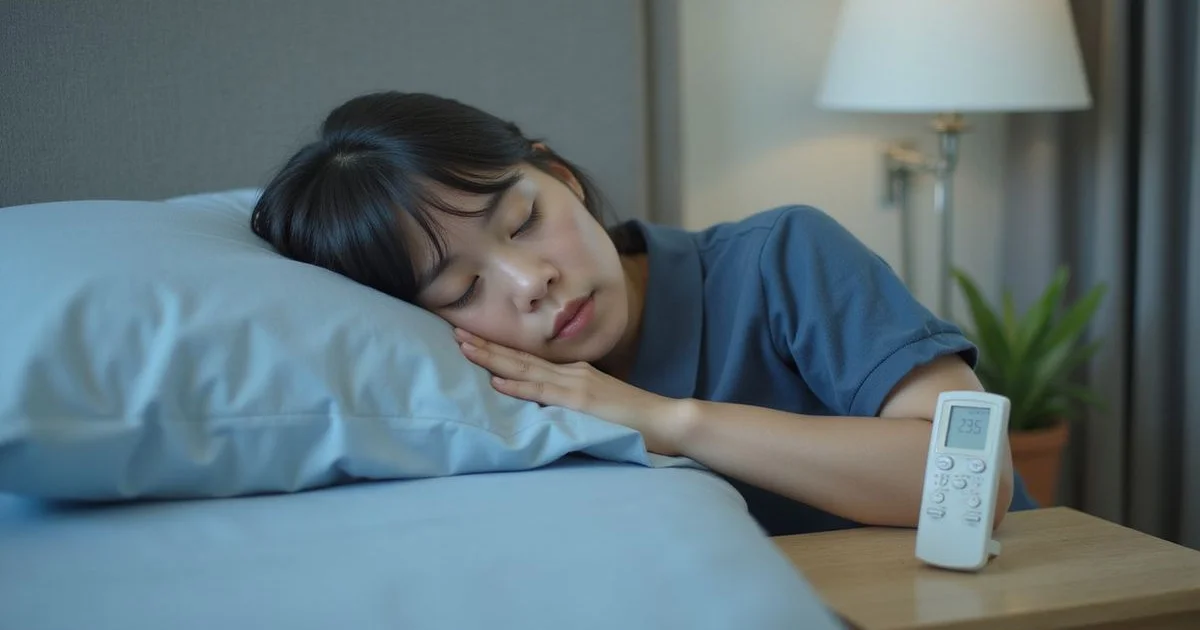
The Sweet Spot: 24°C to 26°C
For most local residents, setting the thermostat between 24°C and 26°C provides the perfect balance. The National Environment Agency officially recommends 25°C as the most energy-efficient temperature for air-conditioning in Singapore.
Our technicians agree completely with this guideline. This range delivers comfortable cooling without leaving you shivering. Energy efficiency improves dramatically, as every degree lower costs about 3 to 5 percent more in electricity. You also reduce the risk of morning stiffness caused by overcooling.
Why Not Lower?
Setting your aircon below 22°C for sleeping is a common habit that often backfires. You may fall asleep quickly, but you will likely wake up cold in the early hours.
We constantly remind homeowners about the financial impact. The SP Group electricity tariff for the first quarter of 2026 sits around 26.71 cents per kWh before GST. Running a compressor at 18°C all night drives up that utility bill significantly. Very cold air also dries out your mucous membranes, causing a dry throat and nose. The temperature difference between your bedroom and the rest of the home causes discomfort when you get up at night.
Why Not Higher?
Above 27°C, shedding body heat in a warm, humid room becomes difficult. You sweat more, which disrupts your sleep cycle.
Our experience shows that rooms feel stuffy at this temperature even with a fan running. Your body simply cannot relax when the ambient temperature is too close to your core temperature.
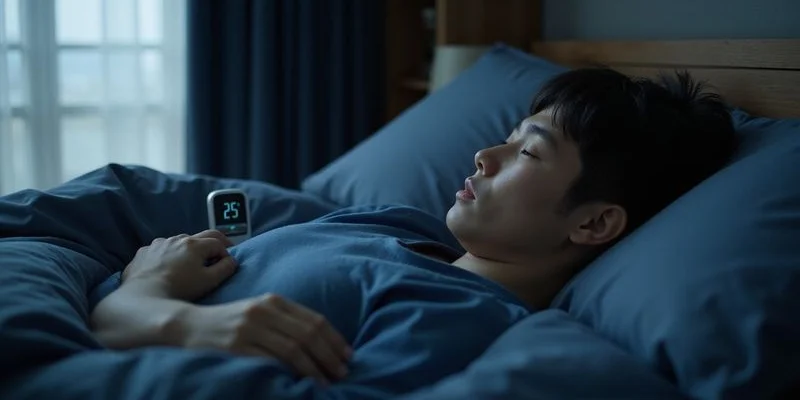
Optimising Your Aircon Settings for Sleep
Use the Timer Function
Set your unit to turn off two to three hours after you fall asleep. Singapore’s outdoor temperature drops slightly in the early morning hours, right when your body temperature hits its lowest point.
We have seen this simple trick save clients 15 to 40 percent of their nightly aircon electricity consumption. Many people sleep comfortably through the rest of the night using just a ceiling fan on low speed.
Use Sleep Mode
Most modern units feature a dedicated sleep or night mode, usually shown as a crescent moon on the remote. This brilliant feature gradually raises the set temperature to match your body’s natural temperature rise through the night.
Our favourite example is Daikin’s Night Set Mode. This function automatically raises the room temperature by 0.5°C after 60 minutes. It prevents excessive cooling and reduces fan speed for a much quieter operation.
Set Fan Speed to Low or Auto
High fan speeds create unnecessary noise and blow a direct cold draft onto your body. A direct draft leads to muscle stiffness and a dry throat.
We suggest using the low or auto fan setting instead. This provides gentle, even cooling without the physical discomfort of a wind tunnel in your bedroom.
Adjust Louver Direction
Angle the louvers so the cold air flows above or along the wall rather than directly onto the bed.
Our customers frequently complain about waking up in pain before making this adjustment. Direct cold air on your body during sleep causes specific physical issues:
- A stiff neck and shoulder tension
- Sinus congestion and morning sneezing
- Dry eyes if you sleep with slightly open eyelids
- Cramping in exposed leg muscles
You completely avoid these problems by simply pointing the airflow towards the ceiling.
Close the Bedroom Door
A closed door keeps the cooled air trapped inside the bedroom. It prevents warm air from the living room or hallway from seeping in.
We always advise keeping doors tightly shut. This basic step allows the compressor to reach the set temperature faster and maintain it with far less effort.
Factors That Affect Your Ideal Sleep Temperature
Body Type and Metabolism
People with higher metabolic rates generate more body heat and generally prefer cooler settings around 23°C to 24°C. Those with lower metabolisms often feel perfectly comfortable at 25°C to 26°C.
Our advice for couples with different preferences is to aim for a compromise around 24°C to 25°C. You can easily manage the difference with adjustable blanket layers.
Bedding Material
Your choice of sheets drastically alters how warm or cool you feel. Sleep experts frequently test different fabrics for moisture-wicking and breathability.
We recommend paying close attention to these material differences:
- TENCEL (Eucalyptus Lyocell): This fabric consistently outperforms others in wicking away heavy sweat and maintaining a cool surface.
- Bamboo Viscose: Excellent for temperature regulation and very soft, but it can cling slightly in high humidity.
- Cotton Sheets: Breathable and good at absorbing moisture, but high-thread-count cotton often traps heat compared to Tencel.
- Memory Foam Mattresses: These retain body heat heavily, meaning you might need to set the room 1°C lower.
Room Size and Aircon Capacity
An undersized unit in a large master bedroom will never reach the target temperature, leaving you warm while the motor runs continuously. An oversized unit will short-cycle, creating frustrating temperature fluctuations that disturb your rest.
We calculate proper BTU sizing to ensure consistent overnight comfort. Matching the cooling capacity to the square footage is essential, which is why a professional aircon installation with a proper site survey makes all the difference.
Window Direction
West-facing bedrooms in HDB flats and condos absorb intense heat throughout the afternoon. Concrete walls store this thermal energy and radiate it indoors for hours after sunset.
Our team has seen extreme cases of this hot wall effect. One local homeowner recently measured a wall temperature of 36°C at 6 PM with the windows completely closed. If your bedroom faces west, you will likely need to start cooling the room earlier in the evening or use heavy blackout blinds.
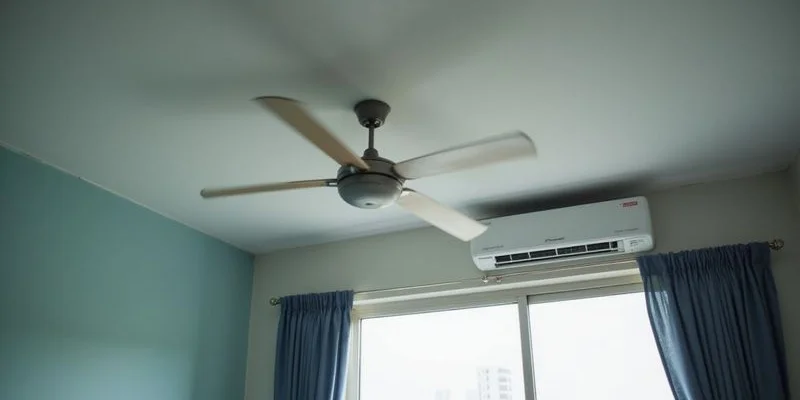
Common Sleep Temperature Mistakes
Setting It Too Low “Just in Case”
Many residents blast their units at 18°C or 20°C, assuming they will warm up under a thick blanket. This habit wastes electricity and guarantees you will wake up freezing in the early hours.
We consider this the most expensive mistake you can make. Your body temperature naturally drops at night, so that extreme cold becomes unbearable by 3 AM.
Running the Aircon All Night at Low Temperature
Running a compressor for eight hours straight at 22°C costs substantially more than running it for four hours at 25°C with a timer.
Our calculations show the comfort difference is minimal, but the financial difference over a month is huge. You are paying for intense cooling when your sleeping body does not actually need it.
Ignoring Humidity
Temperature represents only one part of the comfort equation. High relative humidity makes any room feel much warmer and stickier than the thermometer indicates.
We often find that units failing at dehumidifying force owners to compensate by selecting lower temperatures. A well-maintained system with clean filters removes moisture far more effectively.
Not Maintaining the Aircon
A neglected unit cannot cool a room efficiently.
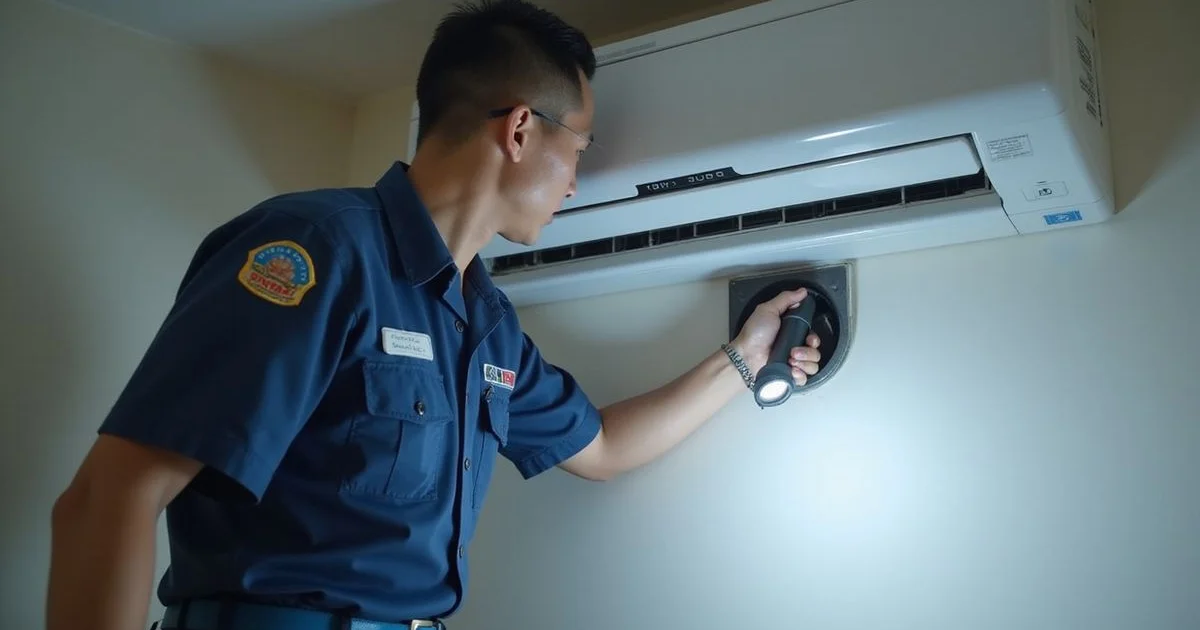
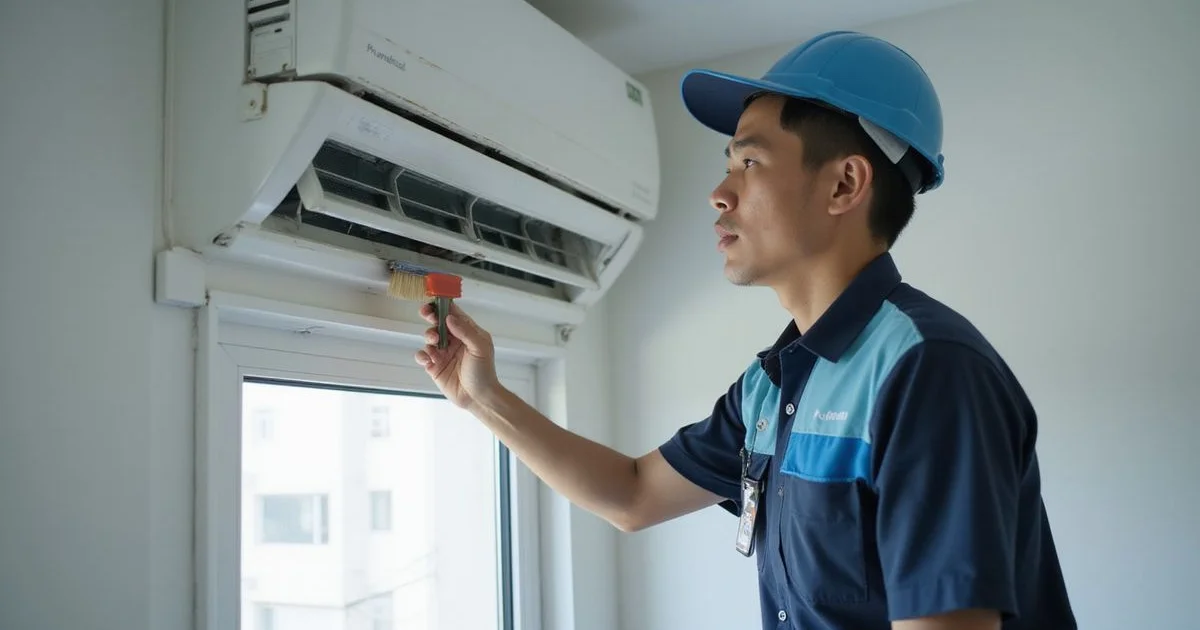
Our technicians see this exact scenario every day. According to the U.S. Department of Energy, a clogged air filter causes a 15 percent reduction in system efficiency. Regular aircon servicing guarantees your unit delivers its rated cooling power while preventing common overnight failures:
- Water leaking directly onto the floor
- Loud rattling or motor noises
- Warm air blowing randomly
- Sudden system shutdowns
You end up dropping the temperature setting just to get normal performance if you ignore routine maintenance.
Temperature Guide by Sleeper Type
Matching the thermostat to your specific needs creates a much better sleep environment.
We created this quick reference table to help you find your starting point. Test these settings for a few nights and adjust as needed.
| Sleeper Type | Recommended Setting | Actionable Tips |
|---|---|---|
| Hot sleeper | 23°C - 24°C | Use Tencel cooling sheets, angle vents away |
| Normal sleeper | 24°C - 25°C | Use sleep mode, set timer to stop after 3 hours |
| Cold sleeper | 25°C - 26°C | Use a breathable blanket, keep fan speed low |
| Couple (mixed preferences) | 24°C - 25°C | Compromise on temperature, use separate blanket layers |
| Children | 25°C - 26°C | Keep slightly warmer, monitor their comfort |
| Elderly | 25°C - 26°C | Avoid overcooling, use moderate fan circulation |
Energy Cost Comparison
Dropping the temperature by just a few degrees changes your monthly utility bill drastically.
We calculated the estimated running costs for a typical 1.5HP inverter unit in a standard Singapore bedroom. These figures clearly show the value of moderate settings.
| Nightly Setting | Est. Monthly Cost* | Comfort & Efficiency Impact |
|---|---|---|
| 20°C all night | $80 - $100 | Usually too cold, forces compressor to run constantly |
| 22°C all night | $60 - $80 | Chilly, requires a thick blanket |
| 24°C all night | $45 - $60 | Comfortable for most residents |
| 25°C with timer (4hrs) | $20 - $30 | Great comfort combined with high cost-effectiveness |
| 26°C with timer (4hrs) | $15 - $25 | The absolute most energy-efficient choice |
*Estimates based on current 2026 SP Group tariff rates and typical usage patterns.
Ensure Your Aircon Is Ready for Restful Nights
If your system is not cooling properly, rattling loudly, or producing uneven temperatures, it is actively ruining your sleep.
We know how important a quiet, reliable unit is for your daily energy. Regular servicing keeps your equipment running efficiently and delivers consistent cooling right at your chosen setting.
Finding the best aircon temperature for sleep in Singapore is easy with a well-maintained unit. WhatsApp Billy Aircon at +65 9456 0875 to schedule a service today and enjoy better sleep tonight.