Most homeowners treat an aircon purchase like buying a television. They focus only on the brand name and the price tag. When learning how to choose the right aircon for your HDB or condo, the real difference between a decade of comfort and years of leaking units comes down to the system configuration.
Founded in 2003 starting with a team of five, Billy Aircon has grown to a team of 26 dedicated to keeping Singapore cool.
We know that choosing the wrong capacity creates a massive bottleneck for your daily comfort. A poorly planned setup leads to short-cycling, high electricity bills, and uneven temperatures across your rooms.
Start by reviewing the exact formulas and regulations required for a successful installation.
This guide explains how to select the best system, calculate the required capacity, and choose from the top brands available today.
Step 1: Choose the Right System Type
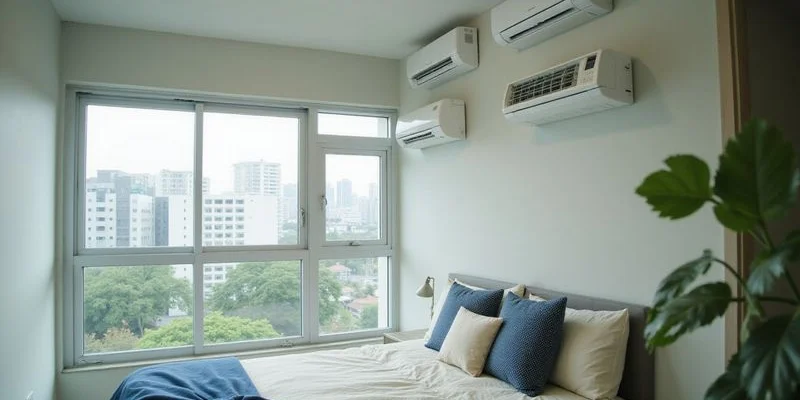
The most popular choice for Singapore homes is the multi-split system. A single outdoor unit connects to multiple indoor units. This configuration typically links 2 to 5 units in different rooms.
We recommend this setup because it saves valuable space on your HDB corridor or condo balcony. It provides efficient cooling for the entire home from a centralized compressor.
Best for: HDB 3-room to 5-room flats, and condos with limited outdoor unit space.
Single-Split System
One outdoor unit connects directly to one indoor unit. This setup is simpler and cheaper than a multi-split configuration. It requires a separate outdoor unit for each room you want to cool.
Our technicians often install single-split units to supplement an existing system. They are also perfect for single room cooling or very small HDB flats.
System 1 to System 5 Configurations
Contractors in Singapore commonly refer to multi-split systems by the number of indoor units. The numbering indicates exactly how many fan coils connect to your single compressor.
- System 2: 1 outdoor + 2 indoor units
- System 3: 1 outdoor + 3 indoor units
- System 4: 1 outdoor + 4 indoor units
- System 5: 1 outdoor + 5 indoor units
Most HDB 4-room and 5-room flats use a System 3 or System 4.
We often warn homeowners about the “connection ratio” trap when selecting these systems. If you connect 45,000 BTU of indoor units to a 36,000 BTU outdoor unit, you create a major bottleneck. The system will struggle to deliver full cooling when all rooms run simultaneously.
Step 2: Calculate the Right BTU Capacity
British Thermal Unit (BTU) measures the cooling capacity of your unit. Choosing the wrong size leads to immediate performance issues.
- Undersized: The unit runs constantly but never cools the room adequately. This results in high electricity bills and poor comfort.
- Oversized: The unit cools too quickly and shuts off, only to restart shortly after. This short-cycling creates uneven temperatures and excess humidity because the system does not run long enough to properly dehumidify the air.
BTU Guide for Singapore Rooms
A standard rule of thumb is to allocate 20 BTUs for every square foot of living space. A small HDB common room of 130 square feet needs roughly 5,000 to 9,000 BTUs to cool effectively.
| Room Size | BTU Needed | Typical Room |
|---|---|---|
| Up to 10 sqm | 9,000 BTU | HDB bedroom, study |
| 10-15 sqm | 12,000 BTU | HDB master bedroom |
| 15-20 sqm | 14,000 BTU | Condo bedroom |
| 20-30 sqm | 18,000 BTU | HDB living room |
| 30-40 sqm | 24,000 BTU | Condo living room |
| 40-50 sqm | 28,000 BTU | Large living/dining |
Factors That Increase BTU Requirements
We always adjust the base calculation based on specific room conditions. Several environmental factors will significantly increase your cooling load.
- West-facing rooms: These receive intense afternoon sun, so you must add 10 to 15% more BTU.
- High floors (above 15th storey): Increased sun exposure requires an extra 5 to 10% capacity.
- Rooms with large windows: Glass creates more heat gain, requiring a 10 to 15% boost.
- Kitchen-adjacent rooms: Heat from cooking appliances warrants an additional 10% capacity.
- Multiple occupants: Each additional person adds about 400 to 600 BTUs of body heat to the room.
Step 3: Inverter vs Non-Inverter
Inverter Technology
Inverter models adjust the compressor speed to match the exact cooling demand of the room. The compressor slows down instead of shutting off completely when the room reaches the set temperature.
Our customers consistently report 30 to 50% lower electricity bills after upgrading to an inverter. The technology provides more consistent temperatures without annoying hot and cold swings.
The lower compressor speeds also result in much quieter operation. The reduced start and stop stress significantly extends the overall lifespan of the compressor.
Non-Inverter Systems
Non-inverter units run the compressor at full speed until the room reaches the target temperature. The system then shuts off completely. The compressor restarts at maximum speed the moment the temperature rises again.
This constant on and off cycling is far less energy efficient and results in higher running costs. The units are noisier due to the full-speed operation and create noticeable temperature swings in the room.
We strongly advise investing in inverter technology for your home. The higher upfront purchase price pays for itself through electricity savings within 2 to 3 years. The Q1 2026 SP Group electricity tariff sits at approximately 29.11 cents per kWh (with GST), making energy efficiency more critical than ever.
Step 4: Compare Brands Available in Singapore
Daikin
This Japanese brand holds an excellent reputation across Singapore for reliable compressors and strong after-sales support. The latest Daikin iSmileEco+ series utilizes eco-friendly R32 refrigerant.
We love installing these units because of their Coanda airflow panel. This specific shape bends the airflow upwards, allowing cool air to travel up to 10 metres without creating uncomfortable direct drafts. The system also features Streamer technology for advanced mould-proof operation.
Mitsubishi Electric
The Mitsubishi Starmex series remains one of the most widely installed systems in Singapore HDB flats. These units are celebrated for their highly reliable performance and extensive service network.
Our technicians appreciate the Dual Barrier Coating found on the newest Starmex R32 models. This unique two-layer coating prevents hydrophilic dirt and hydrophobic oil mist from sticking to the internal components. The indoor units operate at a remarkably quiet 19 dB, making them perfect for light sleepers.
Panasonic
Panasonic offers an outstanding balance of premium features and competitive pricing. Their flagship feature is the nanoe™ X air purification technology.
This proprietary system generates 10 times more hydroxyl radicals than standard units to actively neutralize bacteria, viruses, and stubborn odours. It operates independently of the cooling function, using a mere 35W per hour to purify your air 24/7.
Midea
This Chinese brand has captured significant market share in Singapore through highly competitive pricing. Modern Midea models offer excellent energy efficiency and smart features at a much lower price point.
We consider Midea an excellent value choice for budget-conscious buyers. The units provide dependable cooling performance without the premium brand markup.
Samsung and LG
These Korean brands excel at integrating modern smart home features into sleek, attractive designs. Both brands offer reliable WiFi connectivity that syncs perfectly with platforms like Apple HomeKit and Google Assistant.
They provide good energy efficiency and competitive pricing. Their service networks in Singapore continue to grow and improve every year.
Step 5: Check the Energy Rating
Singapore’s National Environment Agency (NEA) rates energy efficiency using a specific tick system. A higher tick count guarantees better efficiency and lower long-term running costs.
We constantly remind clients that energy labels are not just marketing tools. Starting in April 2025, the NEA raised the Minimum Energy Performance Standards (MEPS). All new split-type aircons must now be at least 4-tick, and multi-split systems must achieve a 5-tick rating.
| Ticks | Efficiency | Financial Impact |
|---|---|---|
| 1 tick | Minimum efficiency | Highest running cost |
| 2 ticks | Below average | Above average running cost |
| 3 ticks | Average | Average running cost |
| 4 ticks | Good efficiency | Lower running cost |
| 5 ticks | Best efficiency | Lowest running cost |
The difference between a 2-tick and a 5-tick unit easily translates to hundreds of dollars in electricity savings each year. Over a 10-year lifespan, that sheer efficiency easily justifies the higher purchase price of a premium model.
Step 6: Consider Features That Matter in Singapore
Dehumidification (Dry Mode)
This setting is absolutely essential in Singapore’s tropical climate. A good dry mode effectively reduces humidity without overcooling the room. This function proves especially useful during the monsoon season when humidity spikes but temperatures drop slightly.
Self-Cleaning Function
Modern units automatically dry the evaporator coil after operation to inhibit severe mould growth. This automated drying cycle reduces musty smells in our humid climate. It significantly extends the time you can wait between professional chemical washes.
WiFi Connectivity
Smart controls allow you to operate your system directly from your smartphone. You can easily turn on the cooling via apps like Panasonic Comfort Cloud before you arrive home. This ensures your living room is perfectly chilled the moment you walk through the door.
Quiet Operation
If you are a light sleeper, you must check the exact noise level specifications before purchasing. Premium inverter units from brands like Mitsubishi Electric can operate as quietly as 19 dB on low fan speeds. This makes the system virtually silent during the night.
Air Purification
Top brands now offer built-in purification features that act like standalone air purifiers. Systems like Panasonic’s nanoe-X and Daikin’s Streamer technology actively trap PM2.5 particles. This addition is highly worthwhile during periodic haze events and for general urban air quality.
HDB-Specific Considerations
Outdoor Unit Placement Rules
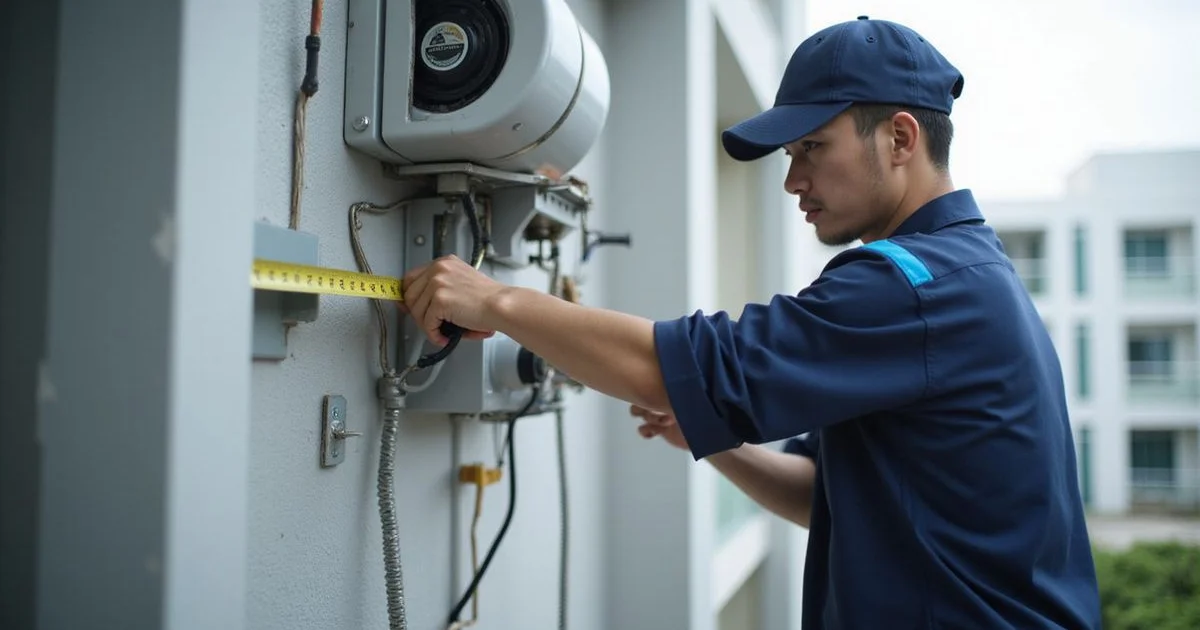
HDB flats dictate strict designated areas for your outdoor compressor placement. These are usually located along the corridor or on a reinforced bracket outside your window.
We urge homeowners to check their specific block’s electrical loading limits before buying. Older flats built before 1994 generally feature a 30-Amp main switch. This restricts your total running current to 8.5 Amps and caps your bracket weight limit at 80kg.
Newer flats built after 1994, or those upgraded under the Home Improvement Programme (HIP), feature a 40-Amp main switch. This upgraded capacity supports more powerful systems and raises the external bracket weight limit to 110kg per wall panel.
Piping Routes and Costs
The physical route from your indoor units to the outdoor compressor directly affects your installation costs. Longer piping runs consume more materials and can slightly reduce cooling efficiency. You should discuss the most direct piping routes with your installer during the initial site survey.
Condo-Specific Considerations
Management Rules and Approvals
Many private condominiums enforce strict rules regarding outdoor unit placement and pipe routing. Some estates even require you to use specific approved installers. You must check with your Management Corporation Strata Title (MCST) office before finalizing any purchase.
Condensing Deck Limitations
Certain condos feature centralized condensing decks where all residents place their outdoor units. This shared space may restrict your choice of compressor size and brand model.
Concealed Piping Infrastructure
Many modern condos come with pre-installed concealed piping hidden inside the walls and ceilings. This existing pipe infrastructure dictates exactly which brands and models are compatible with your apartment.
Installation Matters as Much as the Unit
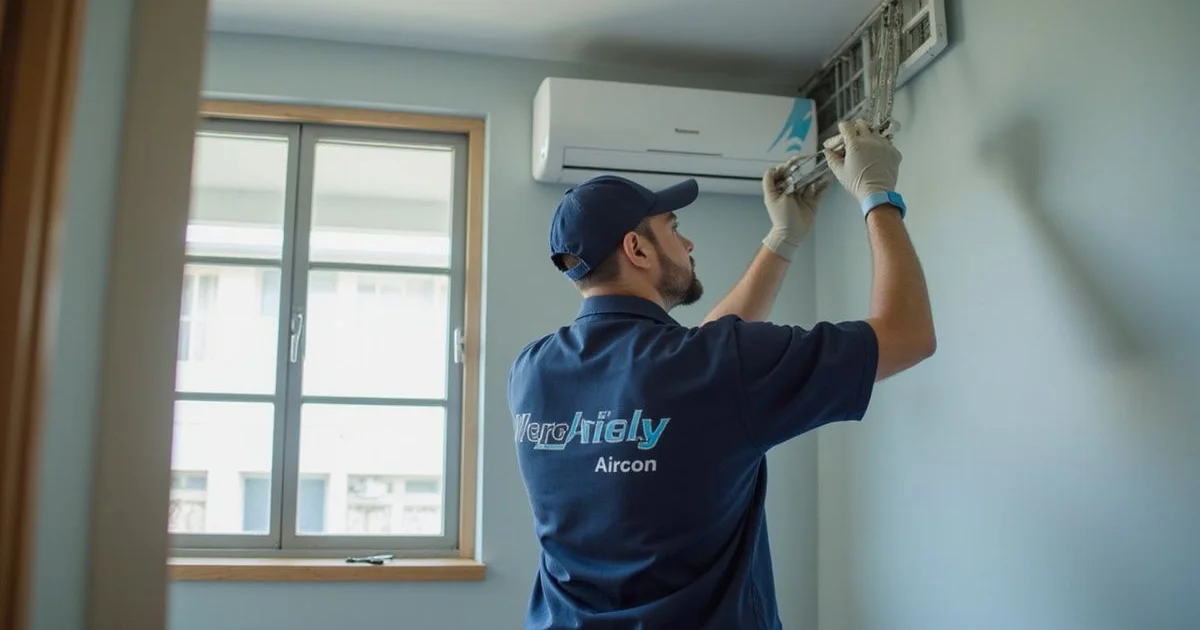
The most expensive aircon in the world will perform poorly if it is installed incorrectly. A professional installation protects your investment and ensures maximum efficiency.
We always follow the “Golden Rule of Drainage” during our projects. All condensation water must discharge cleanly into a nearby floor trap, usually in your bathroom. It is strictly forbidden to let water drip down the external facade of your building.
A quality installation includes several critical components:
- Proper unit sizing and optimal room placement.
- Correct piping with rigorous pressure testing.
- Upgraded 16mm diameter drain pipes to prevent slime clogs, replacing the standard 13mm size.
- Adequate 1/2-inch thick Armaflex insulation on all pipe sections to prevent condensation leaks.
- Proper drainage angles with adequate fall to the floor trap.
- Correct and safe electrical connections.
Our team provides professional installation for all major brands, backed by a comprehensive 90-day workmanship warranty.
Get Expert Advice on Your Aircon Purchase
Still wondering how to choose the right aircon for your HDB or condo?
WhatsApp Billy Aircon at +65 9456 0875 for a free consultation.
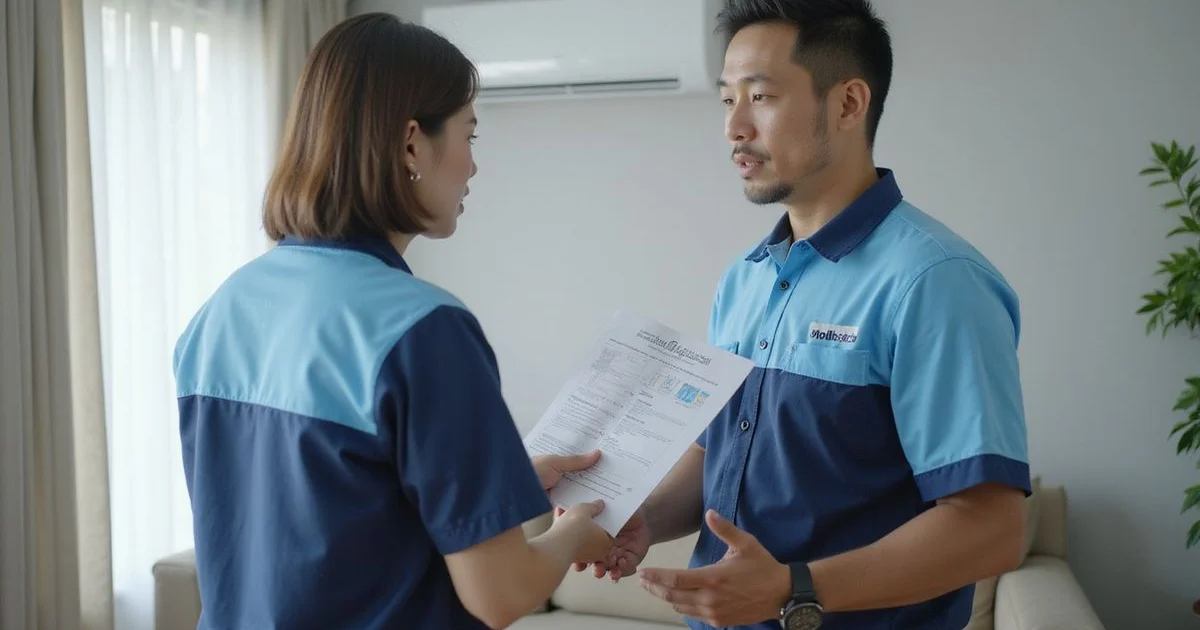
We will carefully assess your space, recommend the correct system capacity, and provide a transparent quote for the supply and installation.
You will get honest advice from dedicated technicians with over 20 years of experience to secure the perfect cooling setup for your home.